Public Transport
Public transportation in Iceland is built around buses, with ferries and domestic flights filling selected longer or island connections. There are no passenger trains or metro lines. The system works well in Reykjavík and for carefully planned point-to-point journeys, but rural sightseeing requires more preparation than in countries with dense rail networks.
This guide explains how to use Reykjavík buses, travel between Keflavík Airport and the capital, understand the separate rural fare system and combine scheduled transport with guided day tours when you do not want to rent a car.
Quick guide to public transportation in Iceland
| Main network | Buses, ferries and domestic flights; Iceland has no passenger rail system |
|---|---|
| Reykjavík buses | Strætó routes 1–36 use Klapp, contactless payment and a 75-minute city ticket |
| Adult city fare | ISK 690 for a single capital-area fare at the time of this update |
| Keflavík Airport | Public route 55 or a flight-timed airport shuttle; check the timetable against your flight |
| Good to know | Capital-area and countryside tickets are separate; check live service updates on travel day |
What public transport can — and cannot — do
Reykjavík is the easiest place in Iceland to explore without a car. City buses reach the centre, residential districts, shopping areas, swimming pools and many everyday services. A city break built around walking, buses and organised day tours can be straightforward and relaxing.
Outside the capital, distances are longer and departures are less frequent. Scheduled buses connect selected towns, but they are designed mainly for transport between communities rather than for stopping at every waterfall, beach and viewpoint. A rural route may be useful for reaching one destination, while a guided tour is often more practical for seeing several natural attractions in one day.
Public buses in Reykjavík
The capital-area bus company is Strætó. Routes 1–36 use the Klapp ticketing system. Visitors can pay with a contactless Visa or Mastercard, the Klappið app, a Klapp card or Klapp ten. Cash is not accepted on city buses.
A standard adult city fare is currently ISK 690 and remains valid for 75 minutes after activation. For contactless transfers and fare capping, use the same physical card or device each time; one bank card pays for one adult passenger. The Klappið app needs an internet connection, so activate the ticket before boarding and keep the screen ready for inspection.
Routes and frequency vary by day and season. Plan each journey in the official route planner and check the service alerts shortly before leaving. If you will visit several museums, pools and attractions, compare normal fares with the current Reykjavík City Card options.
From Keflavík Airport to Reykjavík
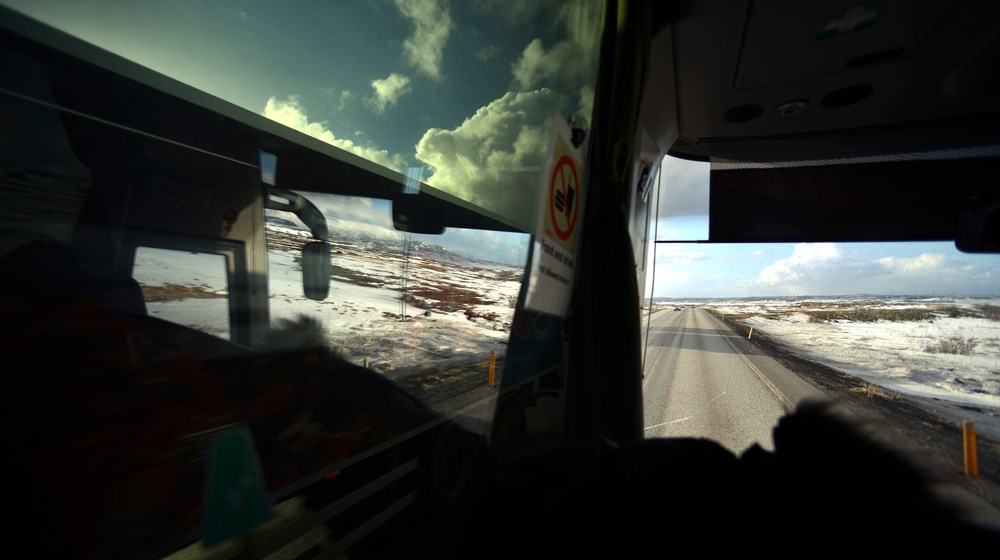
Keflavík International Airport is about 50 kilometres from central Reykjavík. Public Strætó route 55 connects the airport area with the capital. The adult fare between KEF and Reykjavík is currently ISK 2,400, but the public timetable is not organised around every arriving and departing flight. It is most useful when its scheduled times match your journey and you are comfortable with a slower transfer.
Flight-timed airport shuttles such as Flybus are usually simpler for late arrivals, early departures and travellers carrying larger luggage. Private transfers cost more but can make sense for families or groups. Compare the exact drop-off point as well as the price: some tickets end at the main bus terminal, while others include an onward hotel or designated bus-stop connection.
Travelling between regions by bus
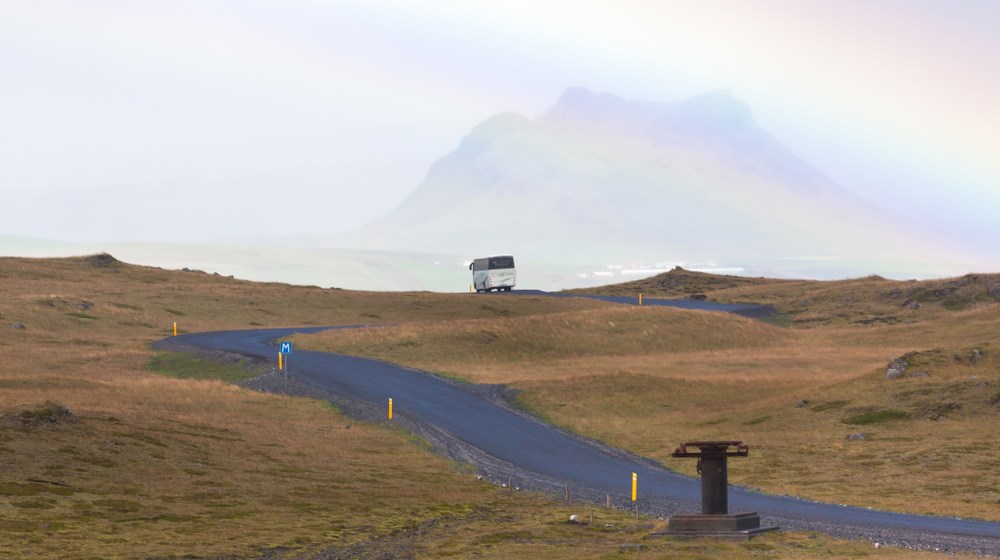
Regional buses serve a selection of towns and transport corridors around Iceland. The clearest overview is the route map at Publictransport.is, followed by the current operator timetable for the route you intend to use. Do not build a tight itinerary from an old map or saved screenshot: seasonal services, school-day patterns and weather changes can affect departures.
Since January 1, 2026, the capital-area Klapp system and the countryside fare system have been clearly separated. A Reykjavík ticket cannot be used on a rural service. Countryside fares are normally paid on board by debit or credit card, cash or a valid rural bus card, depending on the operator.
South and West Iceland
Scheduled buses can help with point-to-point travel along parts of the south and west, but famous attractions are spread out and many lie away from town stops. If your goal is the Golden Circle, the South Coast or Snæfellsnes in one day, a Reykjavík-based sightseeing tour normally gives you more stops and a simpler return plan than combining rural buses.
North and East Iceland
Akureyri is the main transport hub in the north, while other towns are linked by selected regional routes. In East Iceland, connections often focus on communities around Egilsstaðir and the fjords. Build in generous transfer time and confirm the last departure of the day before booking accommodation outside the main centres.
Westfjords and seasonal routes
The Westfjords demand the most careful planning because settlements are far apart, road journeys are long and some connections are seasonal. A route that appears possible on a map may not operate daily or may require an overnight stop. Check every leg with the operator and keep a weather-flexible backup plan.
Ferries and domestic flights
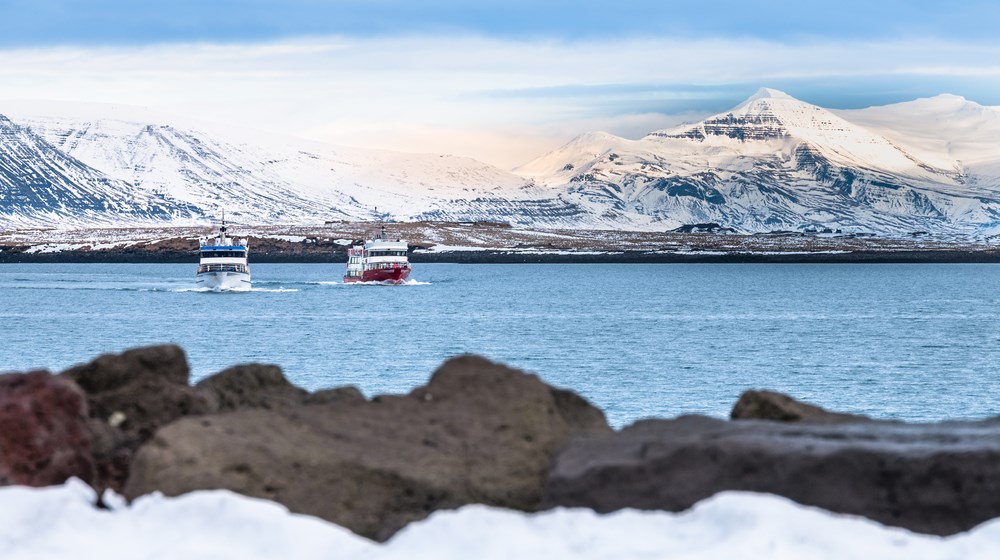
Ferries are essential for several island and coastal journeys. The best-known visitor route links Landeyjahöfn with Vestmannaeyjar, while other services connect Stykkishólmur, Flatey and the southern Westfjords, and additional local ferries serve selected communities. Sailing times and even the departure harbour can be weather-dependent, so always check the operator on the day of travel.
Domestic flights can save considerable time between Reykjavík and distant regional centres such as Akureyri, Egilsstaðir and Ísafjörður. They are useful when your itinerary is short, but allow enough time to travel between Keflavík International Airport and Reykjavík's domestic airport: they are different airports in different locations.
How to plan an Iceland trip without a rental car
A strong car-free itinerary usually combines three types of transport:
- City buses and walking for Reykjavík and the capital area;
- Scheduled transfers for the airport and selected journeys between towns; and
- Guided day tours for natural attractions that are difficult to reach efficiently by public bus.
This approach works especially well for a Reykjavík base. You can keep urban days flexible, reserve a flight-timed airport transfer and choose guided trips for the Golden Circle, South Coast or other multi-stop routes. If you plan several nights in small rural properties, compare the full timetable before booking; a rental car may still be the more practical choice for that specific itinerary.
Practical checklist before you travel
- Use live planners: confirm the route, stop and departure time shortly before every journey.
- Check the fare system: city and countryside tickets are not interchangeable.
- Match the airport option to your flight: public route 55 is cheaper, while shuttles are timed around flights.
- Allow transfer time: rural connections may be infrequent and Reykjavík's domestic airport is not at KEF.
- Watch the weather: wind, snow and rough seas can delay buses, flights and ferries.
- Travel light: confirm luggage and bicycle rules before boarding regional services.
- Keep a backup: save operator contact details and know where you can stay if a connection is cancelled.
Frequently asked questions about public transportation in Iceland
No. Iceland has no passenger rail or metro network. Scheduled public transport is based mainly on buses, with ferries and domestic flights serving selected routes.
Yes, especially if you stay in Reykjavík and combine city buses with airport transfers and guided day tours. A fully independent rural itinerary is possible on selected routes but requires careful timetable planning.
Use a contactless Visa or Mastercard, the Klappið app, a Klapp card or Klapp ten. Cash is not accepted on capital-area buses. Use the same bank card for transfers and fare capping.
A city ticket is valid for 75 minutes after activation. Transfers within that period require the same payment card, device or valid Klapp ticket.
Yes. Strætó route 55 connects the airport area and Reykjavík. Check the current timetable against your flight because it is a scheduled public route, not a flight-timed shuttle.
No. The capital-area Klapp system and rural fare system are separate. Countryside fares are normally paid on board using the payment methods accepted by that operator.
Not always. Some routes run only a few times a day, on selected days or seasonally. Confirm every connection and the last service of the day before booking a rural itinerary.
Yes. Strong wind, snow, ice, flooding and rough seas can delay or cancel buses, domestic flights and ferries. Check service alerts and weather conditions on the day of travel.
Travel without a rental car
These bookable transfers and guided trips work well with a Reykjavík-based, car-free itinerary.
Read more
Continue planning with these related Travel Guide articles.