Icelandic Sheep
Icelandic sheep have shaped the country's farms, food, clothing and seasonal traditions for more than a thousand years. The settlers brought their short-tailed sheep across the North Atlantic in the ninth and tenth centuries. Their descendants still graze across Iceland today, moving through an annual rhythm of winter housing, spring lambing, summer pasture and the great autumn round-ups known as réttir.
Quick guide to Icelandic sheep
| Breed family | Northern European short-tailed sheep, established in Iceland during the settlement period |
|---|---|
| Lambing season | Mainly late April to May, sometimes continuing into early June |
| Summer | Ewes and lambs graze on farms, common land and mountain pastures around the country |
| Autumn round-up | Most réttir take place in September, with timing varying by district and weather |
| Road safety | Slow down early; a sheep may cross suddenly to rejoin a lamb or the rest of its group |
| Good to know | Sheep are livestock: watch from public areas and never enter farmland, feed animals or join farm work without permission |
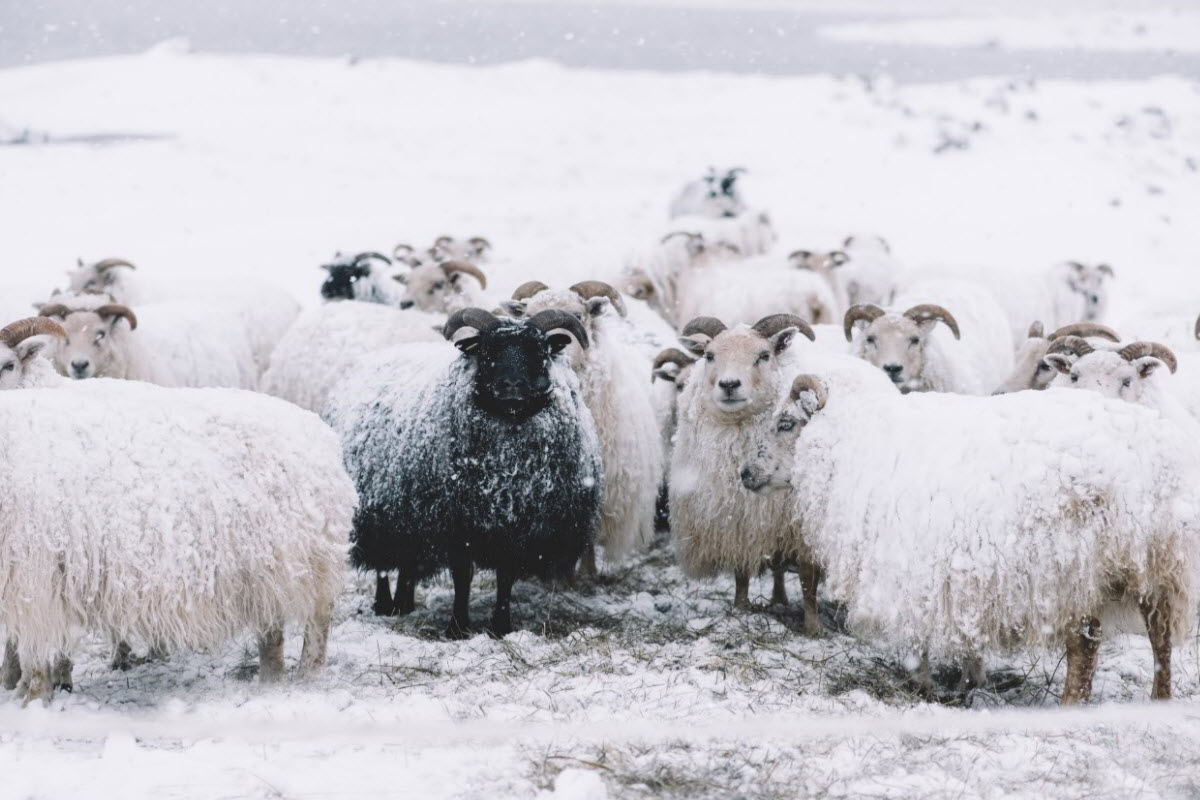
A breed carried across the North Atlantic
The Icelandic sheep belongs to the Northern European short-tailed group, a family of hardy breeds once widespread across northern Europe. Settlers from Norway and the Norse world brought sheep to Iceland because they supplied several essentials at once: wool for clothing and sailcloth, milk and meat for food, skins for practical use and manure for cultivated land.
Centuries of geographic isolation created a distinct national population. Iceland now has one sheep breed, although farmers select different family lines for qualities such as wool, colour, horns, mothering ability, growth and temperament. Strict animal-import controls help protect Icelandic livestock from foreign diseases. It is more accurate to call the population long isolated than to use the old marketing claim that it is one of the world's “purest” breeds.
Appearance, colours and horns
Icelandic sheep are medium-sized, strong-footed and well adapted to rough ground and fast-changing weather. Their faces and lower legs carry little or no wool. Both ewes and rams may be horned or naturally polled, and occasional animals grow four horns. Horn shape varies widely, especially among rams.
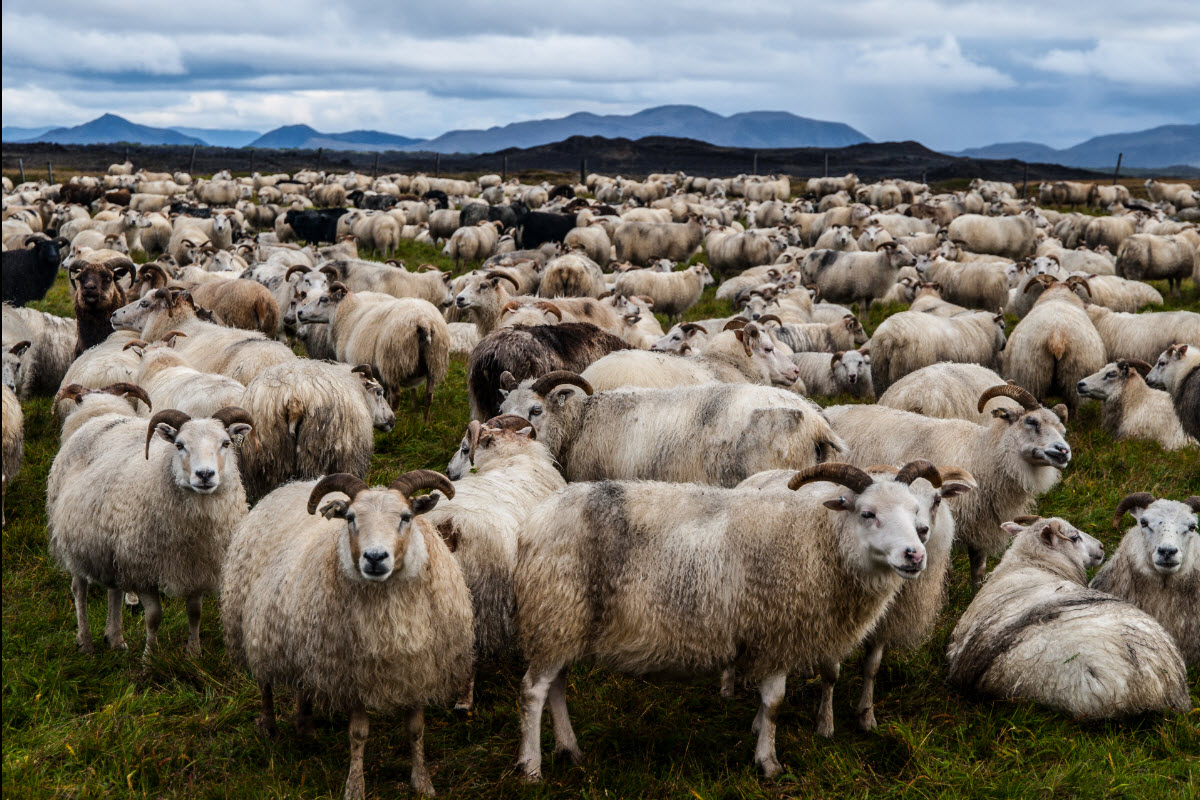
White sheep are most common, but the breed carries an unusually rich range of natural colours and patterns. Black, grey, brown and piebald animals appear alongside white flocks, giving Icelandic wool its characteristic undyed palette. Colour can change as a fleece grows, and grey wool may be produced by a mixture of light and dark fibres.
Leader sheep: forystufé
A small and distinctive strain known as forystufé, or leader sheep, has long been valued for alertness and an instinct to move at the front of a flock. Stories describe leader sheep sensing bad weather, choosing safe routes and encouraging other animals to follow. Modern farms do not depend on them in the same way as earlier generations did, but breeders continue to maintain this unusual part of Iceland's livestock heritage.
The farming year
Winter: shelter, hay and daily care
Through the coldest months most sheep are kept in barns or sheltered farm conditions and fed hay harvested during summer. Farmers monitor health and body condition, prepare ewes for lambing and plan breeding. Exact routines differ between regions, farms and weather years.
Spring: sauðburður, the lambing season
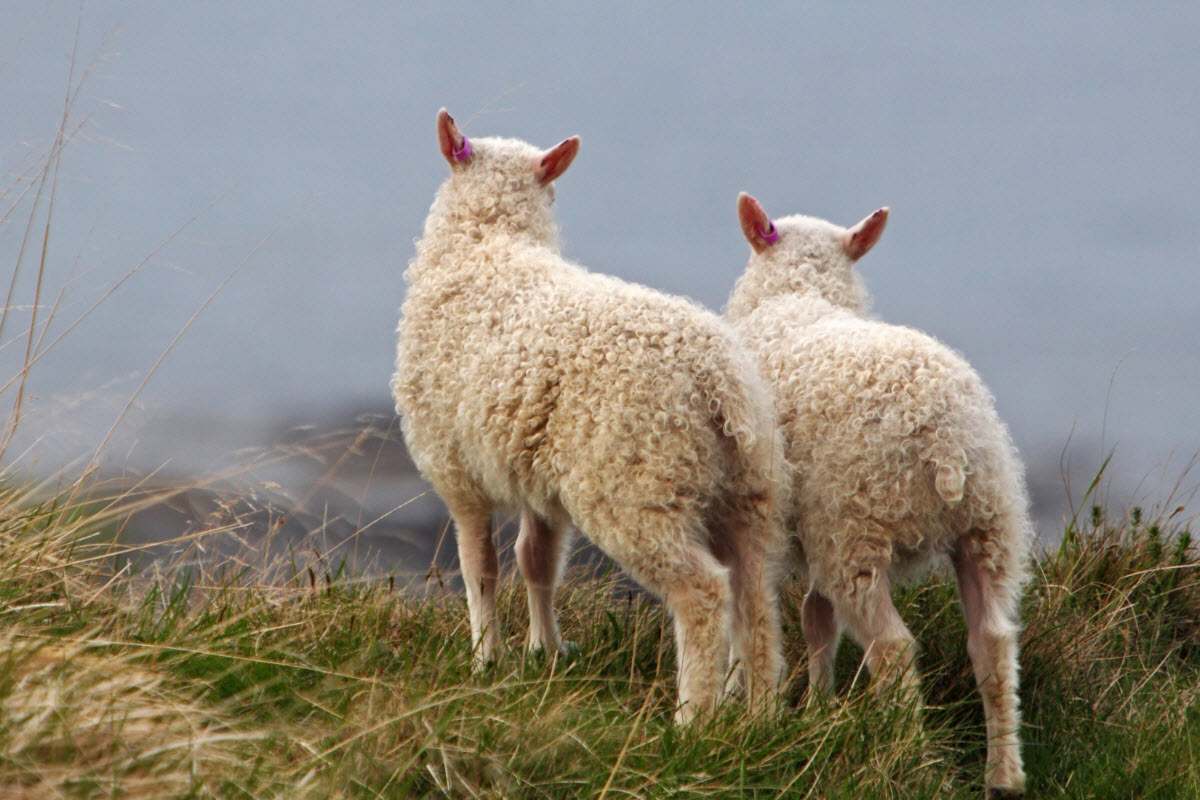
Sauðburður is one of the busiest periods in the rural calendar. Most lambs are born from late April through May, although dates vary and some births occur into early June. Farmers check ewes around the clock, assist difficult births, make sure newborn lambs receive milk and protect vulnerable animals from cold, wind and late snow.
Twin lambs are common, and triplets also occur. A ewe and her lambs learn one another's voices and scent quickly. Once the family is strong enough and pasture conditions allow, they move outdoors.
Summer: open pasture
In summer, sheep graze on farmland, common grazing land and mountain pasture. Visitors see them from the green South Iceland lowlands to the Westfjords, the valleys of North Iceland and the steep mountainsides of the east. Animals are owned and marked even when they appear to be roaming freely.
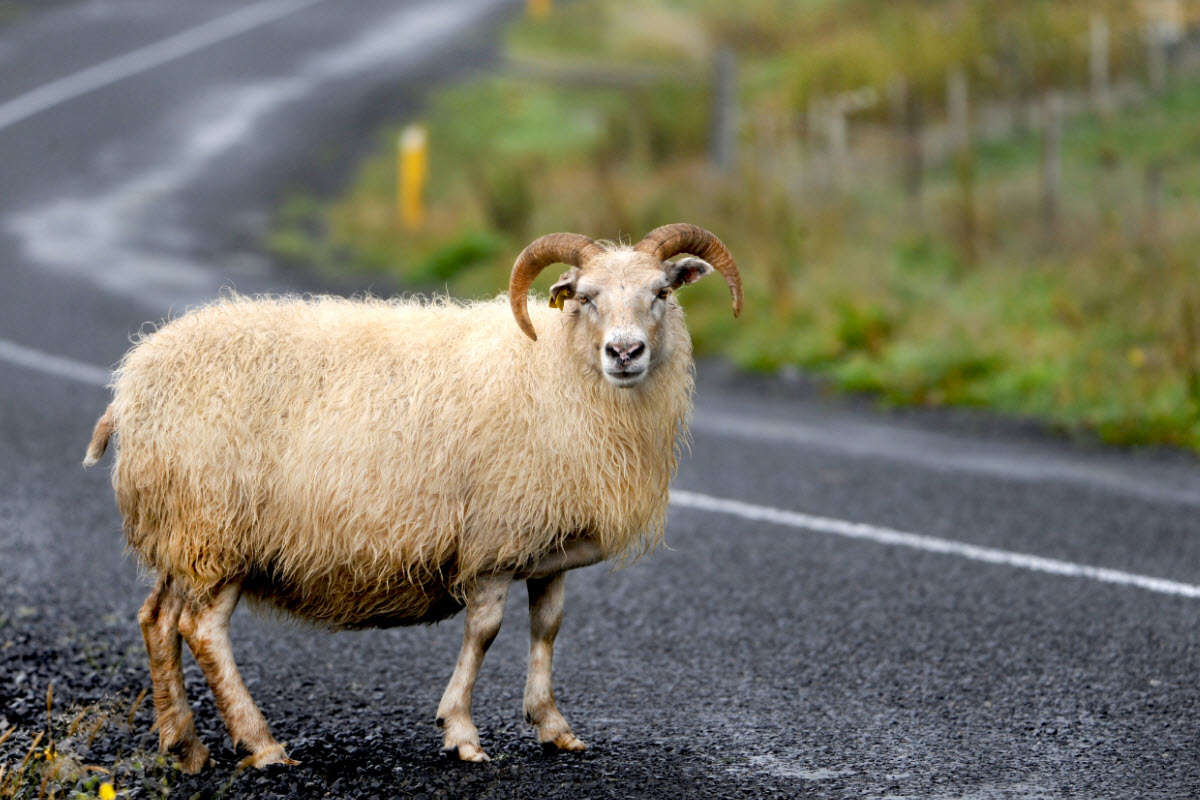
Grazing patterns are managed locally and are not identical in every district. Fences, rivers, mountains and roads do not always keep a family group together, so a ewe may stand on one side of a road while her lambs are on the other.
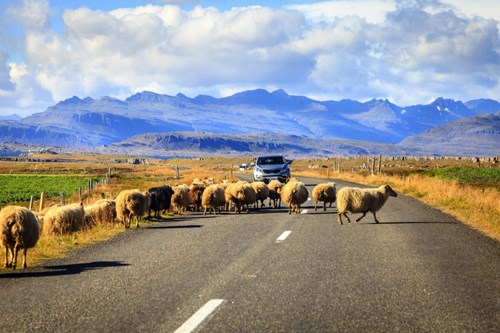
Sheep on Icelandic roads
Sheep are one of the most common summer hazards on rural roads. If an animal is near the verge, reduce speed early and be prepared to stop. Do not assume it will move away from the car: sheep may turn back, run along the road or cross suddenly to reach another animal.
- Scan both sides of the road, especially near bends and blind rises.
- Expect a lamb to follow a ewe, or a ewe to cross after a lamb.
- Avoid sounding the horn unless needed to prevent an immediate collision.
- Never stop in the traffic lane for photographs.
- If an animal appears injured, note the location and contact the police on 112 or a nearby farmer; do not chase it.
Smölun and réttir: the autumn round-up
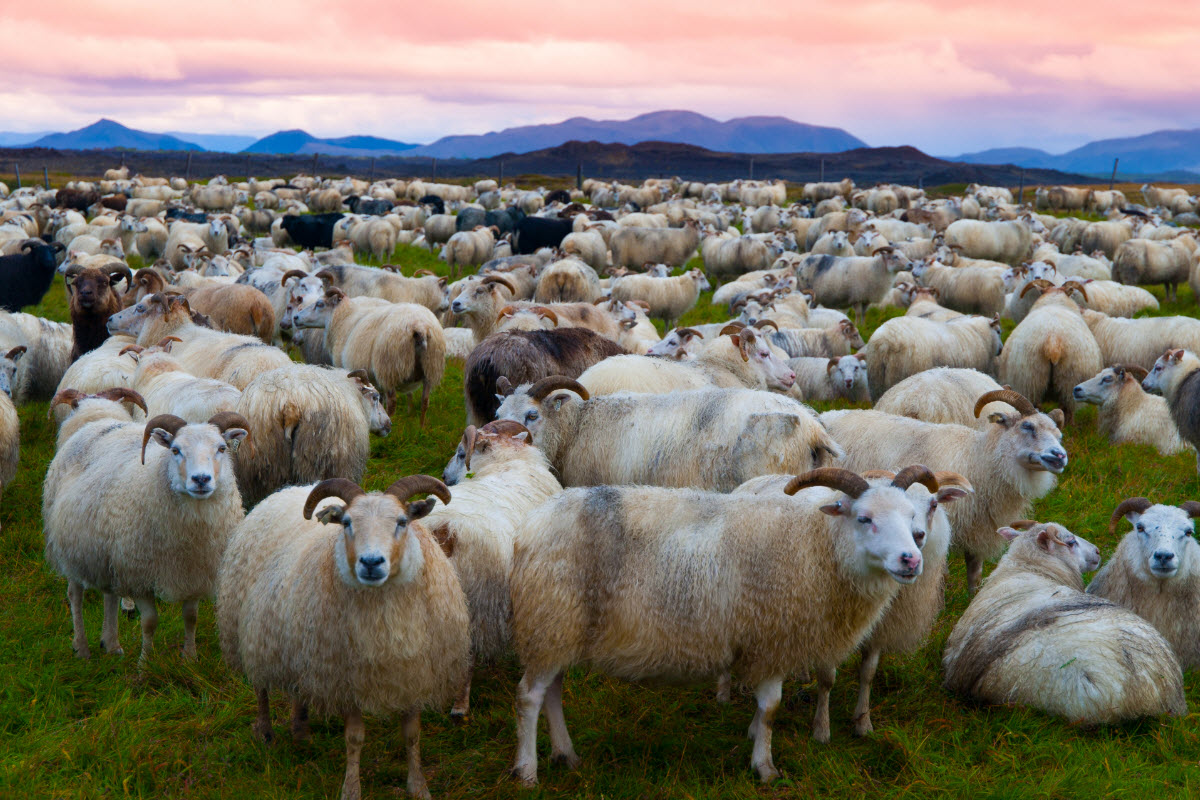
As summer ends, farmers, relatives and neighbours search the hills and drive the sheep back towards the settled valleys. This gathering stage is called smölun. It may take several days and can involve people travelling on foot, horseback or in vehicles across large areas.
The flocks then enter a communal sorting pen for réttir. Sheep move through a central enclosure and are directed into the smaller pens belonging to different farms. Modern ear tags and registered markings help identify ownership. The work depends on cooperation between neighbouring farms and remains an important social occasion in many rural districts.
Dates vary by district, weather and grazing area, but most sheep round-ups take place in September. Some events welcome spectators; others are working farm gatherings with limited space. Check local information, park only where directed, stay outside animal routes and never enter the central pen unless the organisers invite you.
Icelandic wool: tog, þel and lopi
The Icelandic fleece has two main fibre types. The long outer coat, tog, sheds weather and gives strength. The fine undercoat, þel, traps air and provides warmth. Combined, the fibres make a light but insulating yarn well suited to Iceland's climate.
Wool was vital from the settlement period onward. Homespun cloth became a major product and, for centuries, an important measure of value and export trade. Industrial processing later replaced much home production, but spinning, knitting and textile craft remain visible parts of Icelandic culture.
Lopi is an unspun or lightly spun preparation of Icelandic wool used for the familiar patterned sweater known as a lopapeysa. A genuine locally made sweater may use Icelandic wool, but labels and production methods differ, so ask the seller where the wool was sourced and where the garment was made.
Sheep farming, food and rural culture
The breed remains central to Icelandic agriculture. Farms raise sheep for meat and wool, while breeding, grazing and disease control are regulated parts of livestock management. Lamb and mutton appear in traditional dishes as well as contemporary restaurant cooking, and wool supports mills, designers, hand-knitters and small craft businesses.
For visitors, the most meaningful connection is often the annual rhythm itself: newborn lambs close to farms in spring, family groups in the summer landscape, réttir in autumn and wool work through winter. These are living agricultural practices rather than staged wildlife encounters.
Where you will see sheep around Iceland
South Iceland
The broad farming districts east of Reykjavík make sheep especially visible from late spring to early autumn. Expect animals near pasture roads around Hveragerði, Selfoss, Hella, Hvolsvöllur and farther east towards Vík. Traffic is fast on Route 1, so enjoy the view from signed stops rather than the roadside.
West Iceland and the Westfjords
Borgarfjörður, Dalir, Snæfellsnes and the Westfjords combine long farming valleys with exposed coasts and steep mountain roads. Sheep can stand close to narrow carriageways and blind bends. Drive defensively and leave gates exactly as you find them.
North Iceland
Skagafjörður, Húnavatnssýsla, Eyjafjörður and the north-east have strong farming traditions and major communal grazing areas. Sheep are common in valleys and uplands, and several well-known réttir take place across the region in autumn.
East Iceland
The Eastfjords and inland valleys offer extensive summer grazing below steep mountains. Fog and single-lane roads can reduce the time available to react, making lower speed especially important when animals are nearby.
Countryside tours that pair with this guide
These bookable experiences explore Icelandic farm country and rural landscapes; they are not sheep-watching tours, and sheep or farm access are not guaranteed unless the individual tour description says so.
Icelandic sheep photo album
Frequently asked questions about Icelandic sheep
Are Icelandic sheep native to Iceland?
No. Norse settlers brought short-tailed sheep to Iceland in the ninth and tenth centuries. The breed has developed in isolation for more than a thousand years.
Are there more sheep than people in Iceland?
Not as a reliable year-round rule. Official livestock totals change from year to year, and the number of animals rises sharply when lambs are born in spring before falling again in autumn. It is better to use current statistics for a specific year than repeat the old 500,000/800,000 claim.
When are lambs born in Iceland?
Most lambs are born from late April through May, with some lambing continuing into early June. Timing varies between farms.
Why do sheep roam freely in summer?
Many ewes and lambs graze on farms, common land and mountain pastures during the growing season. They still belong to farmers and are identified by registered tags and markings.
What is réttir?
Réttir is the communal autumn sorting of sheep after they have been gathered from summer pasture. Neighbouring farmers direct animals from a central enclosure into the pens belonging to each farm.
What should I do when sheep are beside the road?
Slow down early, scan both verges and be ready to stop. A ewe or lamb may cross suddenly to rejoin the rest of its group.
What makes Icelandic wool different?
The fleece combines a long, weather-shedding outer fibre called tog with a fine insulating undercoat called þel. Together they produce light, warm and durable yarn.
Can visitors enter a farm or join a sheep round-up?
Only with permission or through an organised event. Farms are workplaces and private property. Check local information for public réttir, follow parking and safety instructions, and stay out of livestock routes unless invited.