Hallormstaðaskógur
Hallormstaðaskógur is Iceland's best-known forest, set on the east side of Lagarfljót in East Iceland, close to Egilsstaðir, Atlavík and the Hengifoss route.
Use Hallormstaðaskógur for forest walks, camping, birdlife, lake views and a slower East Iceland stop, with Lagarfljótsormurinn folklore adding a memorable story to the visit.
Quick guide to Hallormstaðaskógur
| Region | East Iceland, on the east side of Lagarfljót |
| Best for | Forest walks, camping, family stops, birdlife, short hikes, lake views and East Iceland route planning |
| Nearby places | Atlavík, Höfðavík, Egilsstaðir, Hengifoss, Skriðuklaustur, Vök Baths, Seyðisfjörður and Stuðlagil route ideas |
| Typical visit time | 1 to 3 hours for a forest stop, longer for hiking, camping or a Lagarfljót loop |
| Best season | Late spring to early autumn for green forest trails and camping; winter is possible with road and weather checks |
| Coordinates | 65°07'26.8"N 14°40'27.2"W |
What is Hallormstaðaskógur?
Hallormstaðaskógur is the largest and best-known forest in Iceland, covering about 740 hectares by Lagarfljót in East Iceland. It is one of the easiest places in the country to feel a real forest atmosphere: birch woodland, planted tree collections, sheltered walking paths, camping areas and views toward the lake.
The forest sits about 26 to 28 km from Egilsstaðir, which makes it a natural stop for travellers using the town as an East Iceland base. It is also a calmer contrast to the fjords, highland roads and waterfall stops nearby.
For SEO and search variations, you may also see the name written as Hallormstadaskogur, but the Icelandic name is Hallormstaðaskógur.
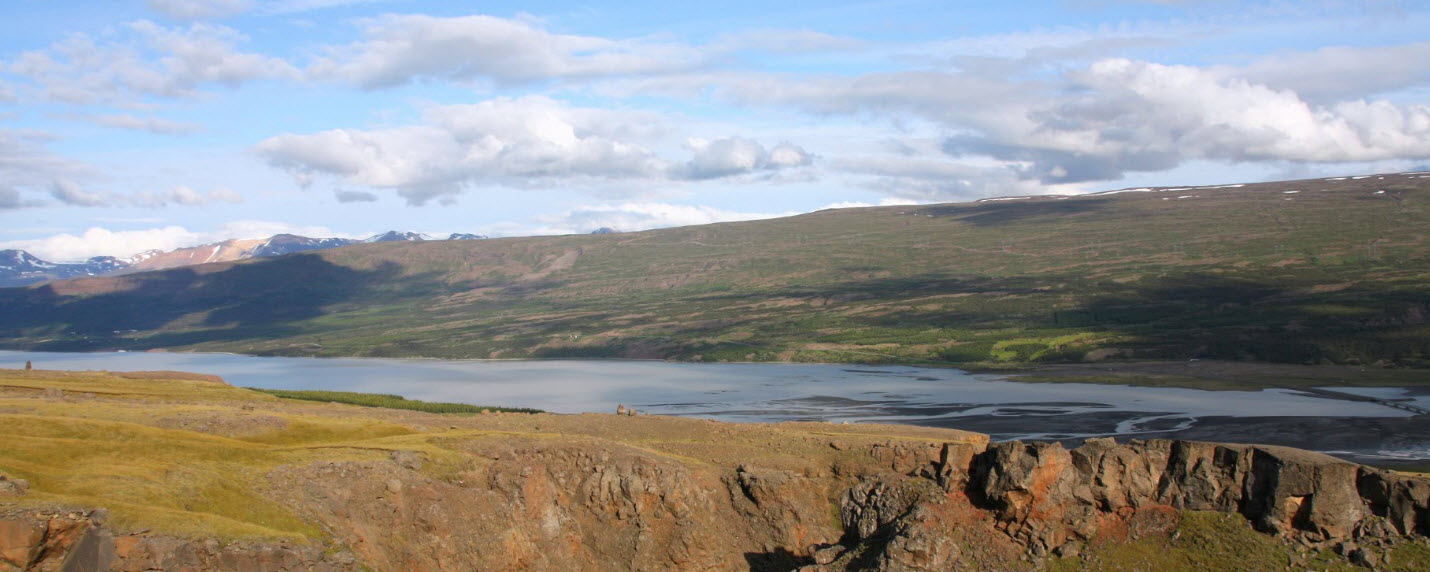
Hallormstaðaskógur is a calm forest stop by Lagarfljót, useful for walks, camping and East Iceland route breaks.
Forest trails, Atlavík and things to do
Hallormstaðaskógur is at its best when you slow down. The forest has a network of marked walking routes, picnic areas and lake-facing stops where you can stretch your legs without turning the day into a major hike. Some trails are short and family-friendly, while longer routes make the forest a useful active stop on an East Iceland itinerary.
The arboretum and tree collections are a major part of the experience. Hallormstaðaskógur is not only native birch woodland; it has also been used for experiments with imported tree species, giving the area a variety that feels unusual in Iceland.
Atlavík is the best-known recreation area in the forest. It is a sheltered bay by Lagarfljót with camping, lake access and space for a picnic or relaxed family stop. Höfðavík is another camping area in the forest, useful if you want to stay overnight rather than only pass through.
Why Hallormstaðaskógur matters
Hallormstaðaskógur has a special place in Icelandic forestry history. The area was protected around the turn of the 20th century and became Iceland's first national forest. That early protection helped preserve birch woodland and made the forest a long-running base for forestry work in East Iceland.
Today the forest is both practical and symbolic: a recreation area, a conservation story, a living tree collection and one of the clearest examples that Iceland's landscape is not only lava, glaciers and open highlands.
Lagarfljót and Lagarfljótsormurinn
Hallormstaðaskógur runs along Lagarfljót, the long lake that shapes this part of East Iceland. The lake is deep, glacial and strongly tied to local folklore because of Lagarfljótsormurinn, the legendary serpent said to live in its waters.
The old story says a girl placed a gold ring under a small heath-worm to make the gold grow. Instead the creature grew, was thrown into Lagarfljót and became the serpent. Later tales describe sightings on the lake, strange humps in the water and the creature as an omen when it appeared.
You do not need to believe in lake monsters to enjoy the story. It gives Hallormstaðaskógur and Lagarfljót a stronger sense of place, especially if you are travelling with children or building a slower loop around Egilsstaðir, the forest, Skriðuklaustur and Hengifoss.
How to visit Hallormstaðaskógur
Hallormstaðaskógur is easiest to visit by car. From Egilsstaðir, follow the route toward the east side of Lagarfljót and Road 931. The forest works well as a short stop, a half-day plan or an overnight camping base depending on your pace.
If you only have a little time, choose a short forest walk and Atlavík. With more time, connect the forest with Lagarfljót viewpoints, Skriðuklaustur, Hengifoss and Vök Baths. In summer, allow extra time for the campsites and local traffic around the lake. In winter, check road and weather conditions before committing to the full loop.
Tours and East Iceland ideas near Hallormstaðaskógur
Hallormstaðaskógur itself is usually self-guided, but it fits very well with East Iceland tours from Egilsstaðir, Seyðisfjörður and the surrounding fjords. These options keep the section focused on East Iceland instead of sending travellers north to Mývatn.
Places near Hallormstaðaskógur
Use the forest as an East Iceland base or soft stop, then connect it with Lagarfljót, nearby bathing, waterfalls and the Eastfjords instead of jumping straight to North Iceland.
Suggested East Iceland itinerary ideas
Short forest stop from Egilsstaðir
Drive to Hallormstaðaskógur, walk a short trail, stop at Atlavík and return by Lagarfljót. This works well when you want a quieter half-day without committing to a long hike.
Forest, folklore and waterfall day
Combine Hallormstaðaskógur with the Lagarfljótsormurinn story, Skriðuklaustur and Hengifoss. This gives the day a mix of woodland, lake folklore, history and one of East Iceland's strongest waterfall hikes.
Soft day after the Eastfjords
Use the forest as a rest day between fjord driving and the next Ring Road leg. Add Vök Baths if you want a warm, low-effort finish near Egilsstaðir.
Seyðisfjörður and East Iceland tour day
If you are based in Egilsstaðir or arriving through Seyðisfjörður, pair the forest with an East Iceland nature, puffin, canyon or coastal tour rather than sending the route north too quickly.
FAQ about Hallormstaðaskógur
Is Hallormstaðaskógur worth visiting?
Yes, especially if you want a calm East Iceland stop with forest walks, camping, birdlife, lake scenery and a different landscape from the open highlands and fjords.
Where is Hallormstaðaskógur?
Hallormstaðaskógur is on the east side of Lagarfljót in East Iceland, about 26 to 28 km from Egilsstaðir.
What is Hallormstaðaskógur known for?
It is known as Iceland's largest and best-known forest, with birch woodland, planted tree collections, marked trails, camping areas and a long forestry history.
How long do you need in Hallormstaðaskógur?
Allow 1 to 3 hours for a useful visit. Stay longer if you want to hike, camp, picnic by Lagarfljót or connect the forest with Hengifoss and Skriðuklaustur.
Can you camp in Hallormstaðaskógur?
Yes. Atlavík and Höfðavík are the main camping areas in the forest, and Atlavík is especially popular for lake access and a sheltered family-friendly setting.
What is Atlavík?
Atlavík is a small bay by Lagarfljót inside Hallormstaðaskógur. It is one of the best-known recreation areas in the forest, with camping, picnic space and easy access to the lake.
What is Lagarfljótsormurinn?
Lagarfljótsormurinn is the legendary serpent of Lagarfljót. Local folklore says it began as a small worm placed under a gold ring, grew into a lake creature and has appeared in stories and claimed sightings for centuries.
Can you see Lagarfljótsormurinn from Hallormstaðaskógur?
There is no reliable way to see it, of course, but Hallormstaðaskógur is one of the most atmospheric places to enjoy the Lagarfljót legend because the forest sits directly by the lake.
What places are near Hallormstaðaskógur?
Nearby East Iceland ideas include Atlavík, Höfðavík, Egilsstaðir, Lagarfljót, Skriðuklaustur, Hengifoss, Vök Baths, Seyðisfjörður and wider Eastfjords route stops.
What tours work well near Hallormstaðaskógur?
Choose East Iceland tours from Egilsstaðir, Seyðisfjörður and nearby fjords, such as Vök Baths, East Iceland Nature & Culture, Streiti Coastline, Stuðlagil, puffin and Gufufoss tours, or seasonal reindeer experiences.