Austurvöllur
Austurvöllur is Reykjavík’s central civic square, framed by the Parliament House, Reykjavík Cathedral, Hotel Borg and café-lined streets. It is a summer meeting place, a stage for public gatherings and an easy starting point for exploring the oldest part of the capital on foot.
Quick guide to Austurvöllur
| What it is | Reykjavík’s historic civic square and a popular central meeting place |
|---|---|
| Location | Between Kirkjustræti, Pósthússtræti, Vallarstræti and Thorvaldsensstræti |
| Admission | Free; the outdoor square is open at all times |
| Main landmarks | Parliament House, Reykjavík Cathedral, the Jón Sigurðsson statue and Hotel Borg |
| Best time | A calm summer afternoon for the lawn and cafés, or early morning for architecture and photographs |
| Good to know | The square is a focus for demonstrations and official gatherings; temporary barriers are normal |
| Coordinates | 64.1472130, -21.9397458 |
Austurvöllur: the civic heart of old Reykjavík
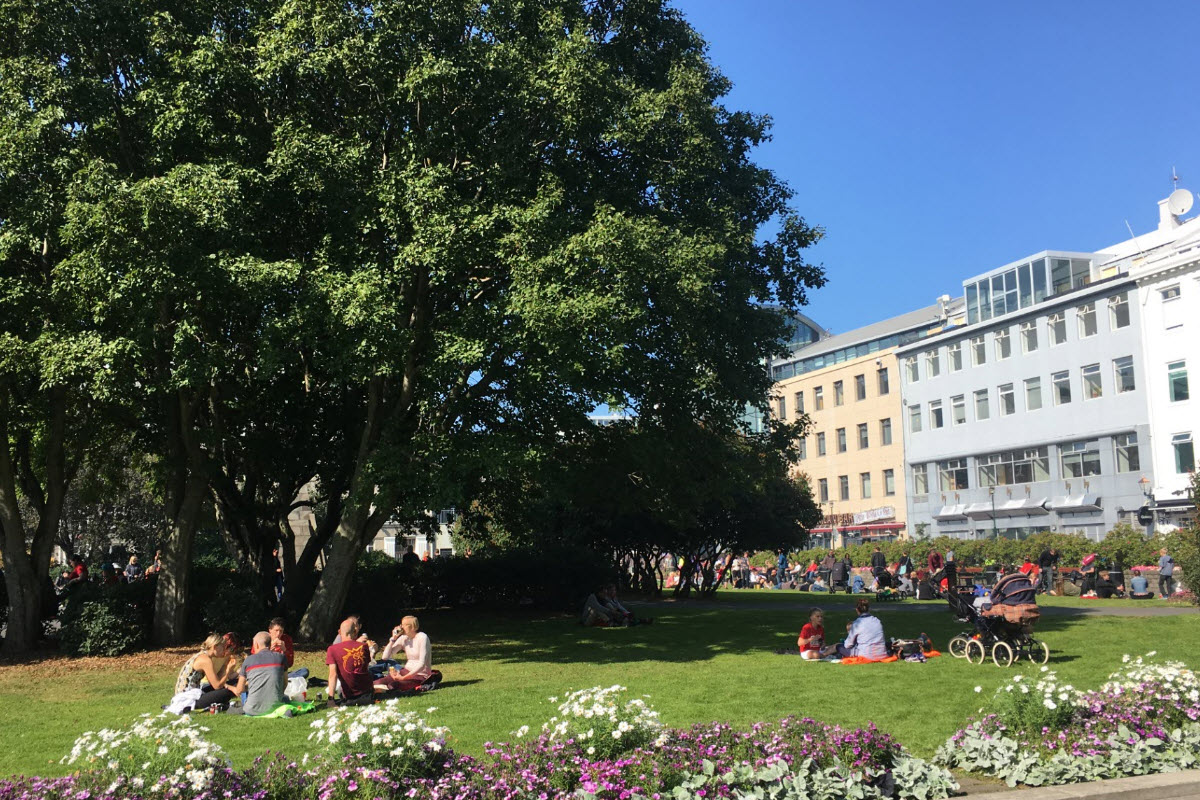
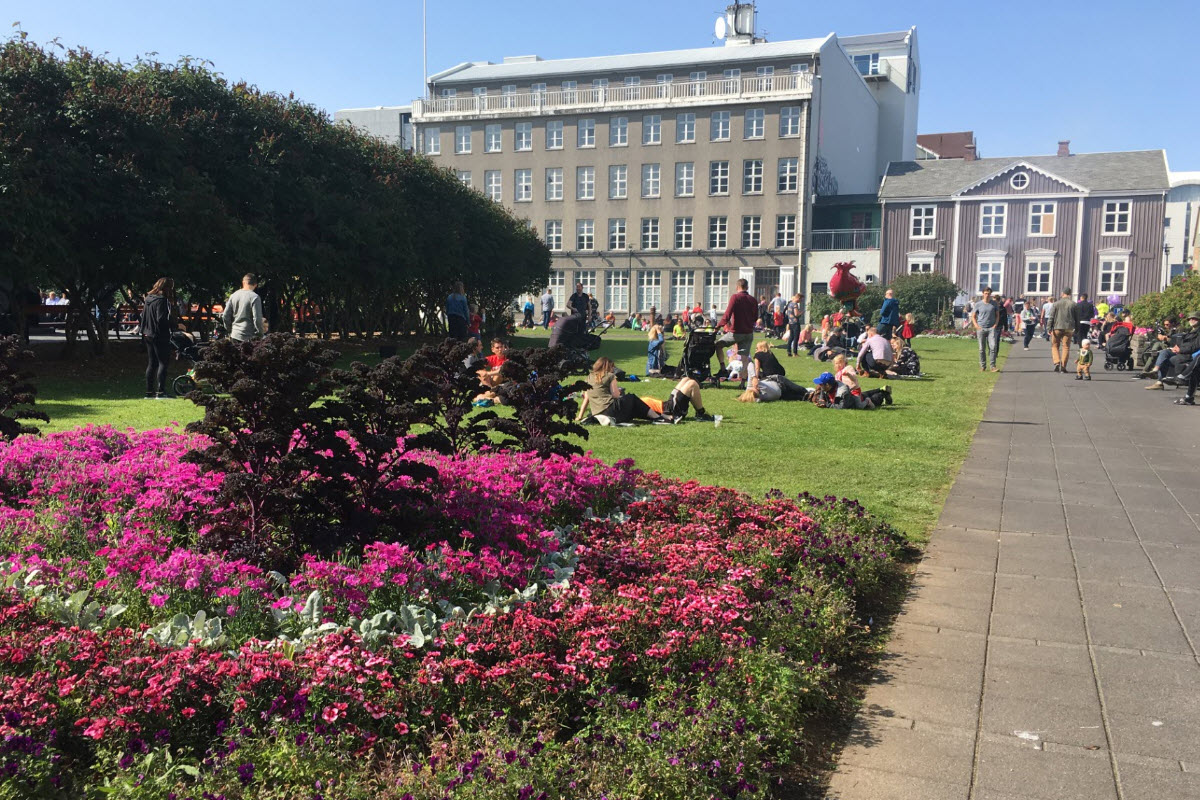
Austurvöllur is small enough to cross in a minute, yet much of Reykjavík’s public life has gathered around it. On warm days the lawn fills with people, café tables spread along the neighbouring streets and the square feels like an outdoor living room. During demonstrations or national occasions, the same space becomes a civic stage facing the Parliament House.
The square works best as part of a walk rather than an isolated destination. It sits between the old harbour, Lækjartorg, City Hall and the oldest streets of central Reykjavík. Allow 20–30 minutes for the landmarks, or longer if you stop at a café, attend a parliamentary sitting or continue through the old city.
Parliament House and Icelandic democracy
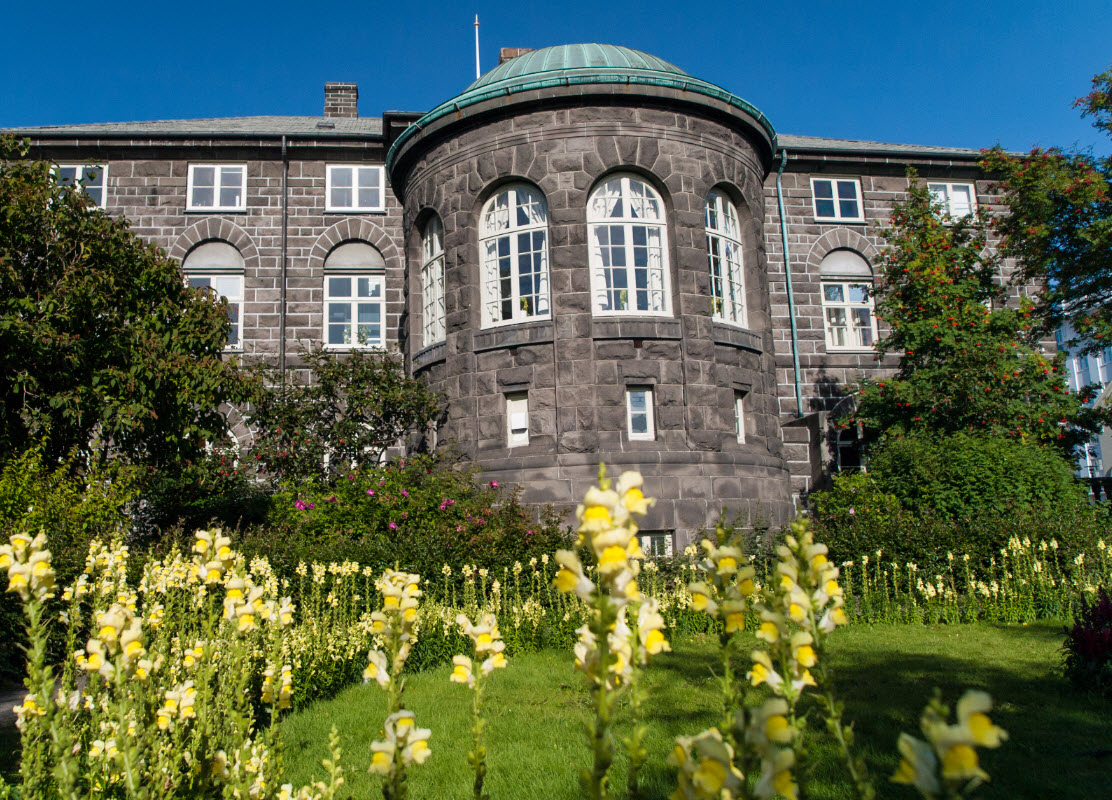
Alþingishúsið stands on the southern edge of Austurvöllur. The original Parliament House was built in 1880–81 from hewn Icelandic basalt and designed by Danish architect Ferdinand Meldahl. Later additions include Kringlan from 1908 and Skálinn from 2002. Behind the building, the Parliament Garden dates from 1893–95 and is described by Alþingi as Iceland’s oldest public garden.
The exterior is the most dependable part of a casual visit. Parliament is a working institution, not a museum with continuous public tours. Alþingi currently organises building visits for educational or academic groups by prior arrangement, while members of the public may observe proceedings from the public gallery when Parliament is sitting and access is available. Check the official Alþingi visitor information before planning around indoor access.
Reykjavík Cathedral and the buildings around the square
Dómkirkjan, Reykjavík Cathedral, stands beside Parliament House on Kirkjustræti. It is an active Lutheran church and one of the city’s most historically important buildings. Its modest scale is part of the character of Austurvöllur: national institutions here are woven into ordinary streets rather than separated in a monumental district.
Hotel Borg anchors another side of the square, while Vallarstræti and Pósthússtræti are lined with restaurants, bars and cafés. Look beyond the individual façades to the relationship between them: the square is a compact room made from buildings of different periods, with the lawn and statue holding the centre.
Jón Sigurðsson and the independence movement
The statue in the centre represents Jón Sigurðsson, the nineteenth-century scholar and political leader associated with Iceland’s independence movement. His birthday, 17 June, became Iceland’s National Day. The monument gives the square a direct connection between political memory and the modern public life taking place around it.
A statue of Danish-Icelandic sculptor Bertel Thorvaldsen previously occupied the central position and now stands in Hljómskálagarðurinn. That change is a useful reminder that public squares are not fixed displays: the people, symbols and events associated with Austurvöllur have shifted with the city.
Demonstrations and public gatherings
Austurvöllur is Reykjavík’s best-known protest square because Parliament faces directly onto it. Large demonstrations during the financial crisis after 2008 reinforced that role, but the tradition is broader: citizens gather here to make political demands, mark national moments and respond to events.
If a demonstration is taking place, remain aware of barriers, police instructions and changing traffic around the old city. Peaceful gatherings can also be an important part of understanding contemporary Iceland. Photograph respectfully, avoid obstructing participants and do not assume a public event is staged for visitors.
Summer, winter and the best time to visit
Summer shows Austurvöllur at its most social. The grass becomes a place to sit, outdoor tables fill and long daylight keeps the surrounding streets active into the evening. Early morning is quieter and best for clean views of Parliament House and the cathedral.
In winter the square is more subdued, with snow, lights and short daylight changing its proportions. Wind can funnel through the surrounding streets, so Austurvöllur is usually a short stop between indoor attractions. Cafés, City Hall and Harpa provide natural sheltered pauses.
A self-guided old Reykjavík walk
Begin at Austurvöllur with Parliament House, the cathedral and the Jón Sigurðsson statue. Walk west to Reykjavík City Hall and Tjörnin, then loop through the streets around Aðalstræti and Ingólfstorg. Continue north to the old harbour or east through Lækjartorg to Harpa.
For a longer architectural route, climb towards Hallgrímskirkja via Bankastræti and Skólavörðustígur. This links the intimate scale of the old civic centre with the capital’s strongest twentieth- and twenty-first-century landmarks.
Reykjavík city tours near Austurvöllur
Austurvöllur sits inside the historic centre covered by Reykjavík’s strongest walking tours. These live FunIceland tours add Viking history, folklore, food, architecture and flexible city sightseeing.
See also in Reykjavík
Continue exploring with three closely connected Reykjavík places.
Frequently asked questions about Austurvöllur
Yes. Austurvöllur is a public outdoor square and park with no admission fee and no closing time.
The Parliament House, Reykjavík Cathedral, Hotel Borg, the Jón Sigurðsson statue and several cafés, restaurants and bars surround the square.
It is a working parliament rather than a continuously open museum. Educational group visits require advance arrangements, and access to the public gallery depends on parliamentary sittings and current procedures.
It depicts Jón Sigurðsson, a leading figure in Iceland’s nineteenth-century independence movement. Iceland’s National Day is celebrated on his birthday, 17 June.
The square faces Parliament House and gives large public gatherings a central, visible location. It was especially prominent during demonstrations after the 2008 financial crisis.
Choose a calm summer afternoon for the social atmosphere or early morning for quieter views and photographs of the surrounding buildings.
Twenty to thirty minutes is enough for the main landmarks. Allow longer for a café stop, a guided walk or a route through City Hall, the old harbour and Harpa.
Dómkirkjan is an active church, so access depends on services, ceremonies and current opening arrangements. Visit quietly and follow signs or staff guidance.
Yes. The square is a short walk from the old harbour, Harpa, Lækjartorg, City Hall and Tjörnin.
Walk with a Viking is the strongest general introduction to city history. The Private Reykjavík Architecture Walk adds more design context, while the Folklore Walk is ideal for storytelling.
Austurvöllur photo album
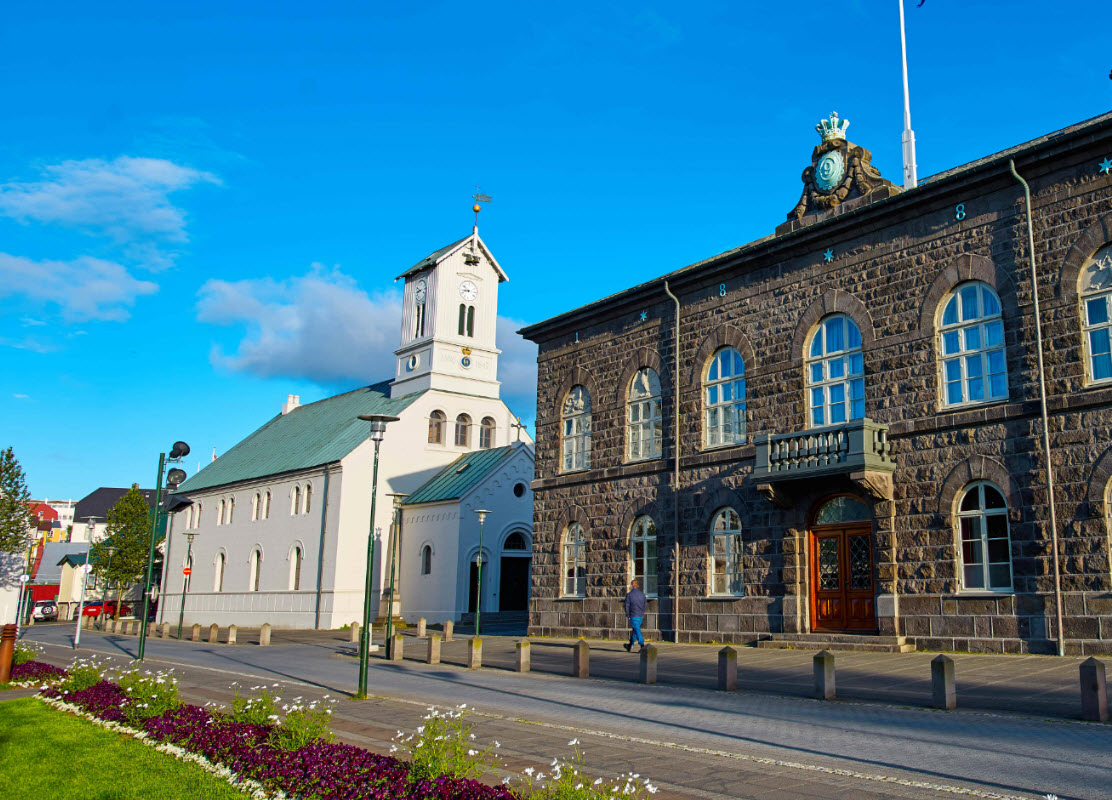
The Parliament House (Alþingishúsið) and The city's oldest church (Dómkirkjan) at Austurvöllur in Reykjavík
Enjoying a nice day at Austurvöllur in Reykjavík
The Parliament House (Alþingishúsið) at Austurvöllur in Reykjavík
Austurvöllur public square downtown Reykjavík