Imagine Peace Tower – Viðey visitor guide
Imagine Peace Tower is Yoko Ono’s outdoor artwork on Viðey, dedicated to John Lennon and their continuing message of peace. This guide explains when the light is visible, how to reach the island, what to expect after dark and how to combine the artwork with Viðey’s history, walking paths and views across Reykjavík.
Quick guide to Imagine Peace Tower
| What it is | An outdoor light artwork by Yoko Ono, dedicated to John Lennon |
|---|---|
| Location | Viðey island in Kollafjörður, just off Reykjavík |
| Annual lighting | 9 October–8 December, 21–31 December, 18 February and 20–27 March |
| Best experience | After dark on a clear or partly cloudy evening |
| Getting there | Passenger ferry; sailing points and schedules vary by season |
| Time to allow | About 1.5–3 hours including ferry and walking |
| Good to know | Viðey is exposed to wind; ferries can change or cancel because of sea conditions |
| Coordinates | 64.1632751, -21.8592730 |
Why visit Imagine Peace Tower?
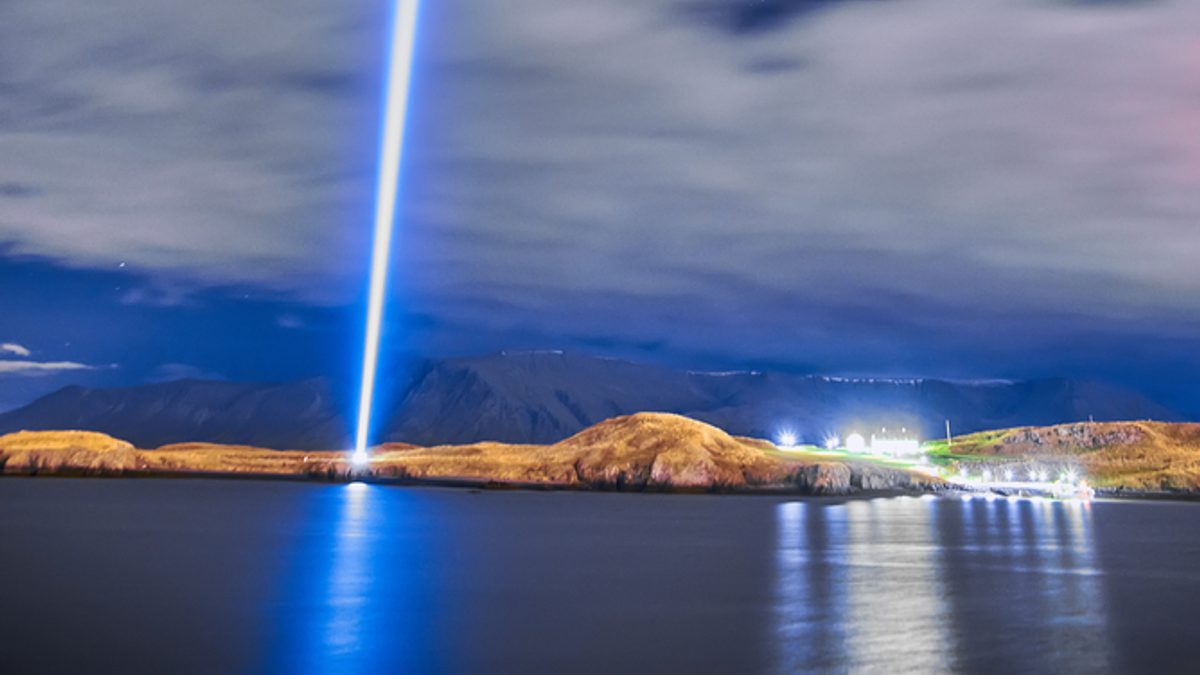
The artwork turns a small island in Reykjavík’s bay into one of the city’s most recognisable night-time landmarks. A group of powerful lights rises from a circular wishing well and meets in a changing column above Viðey. Clear air can produce a sharply defined beam, while thin cloud, rain or snow scatters the light into wider shapes and reflections.
You can often see the beam from the Reykjavík waterfront, but an island visit reveals the scale of the work, the inscribed base and the quiet landscape around it. The combination of contemporary art, darkness, sea air and views back to the city makes the experience very different from an indoor museum visit.
Yoko Ono’s memorial to John Lennon
Yoko Ono conceived Imagine Peace Tower as an outdoor artwork and dedicated it to John Lennon. It was unveiled on 9 October 2007, Lennon’s birthday. The work continues the peace campaign associated with Ono and Lennon and uses light rather than a solid vertical structure as its central form.
The words IMAGINE PEACE are inscribed on the wishing well in 24 languages. Wishes collected through Ono’s Wish Tree project are connected to the work’s wider idea: individual hopes gathered into a shared appeal for peace.
When is the tower lit?
The official annual lighting periods are 9 October–8 December, 21–31 December, 18 February and 20–27 March. The nightly starting time varies with the season; the beam normally appears after sunset and usually remains visible until midnight, with longer illumination on selected dates.
Always check the official visitor information before travelling. Special ceremonies, ferry arrangements and exact lighting times can change, and bad sea conditions may cancel island sailings even when the light itself is switched on.
Getting to Viðey
Viðey is reached by passenger ferry. Departure points and frequency vary between summer, winter and special lighting events, so use the current operator timetable rather than planning from an old printed schedule. Reserve ahead when required and arrive early enough to find the correct pier.
The crossing is short, but wind and sea state matter. Wear a waterproof outer layer and footwear with grip, and keep your return sailing in mind while exploring. On event nights, follow staff instructions because boarding arrangements can differ from ordinary weekend service.
Walking to the artwork
From the ferry landing, follow the marked paths towards the western part of Viðey. The terrain is generally straightforward, but the island is unlit in places and can be wet, icy or uneven. A small torch or phone light is useful for the walk without replacing warm clothing or careful footing.
Give yourself time to let your eyes adjust. The artwork is best appreciated without bright screens or flash, and a stable surface or tripod helps with night photography. Stay on paths and avoid disturbing birds, vegetation or archaeological remains.
What else to see on Viðey
Viðey combines art with layers of Reykjavík history. Viðey House and the island church form the best-known historic group near the landing. Farther west, Richard Serra’s Áfangar uses pairs of basalt columns to frame changing views of sea, mountains and city.
Longer paths continue towards the remains of the former settlement and industrial activity on the eastern island. In daylight, the walking routes and birdlife justify a visit even when the Peace Tower is not illuminated. Check seasonal food and service availability before relying on facilities.
Accessibility and weather
Access involves a ferry, gangway and outdoor paths, so conditions are more variable than at a city-centre attraction. Travellers with limited mobility should ask the ferry operator about the vessel, boarding assistance and current path conditions before booking.
Viðey is exposed. A calm evening downtown can feel colder on the island, and rain, wind or ice can develop quickly. Bring an extra layer, protect cameras from moisture and treat any sailing cancellation as a safety decision.
A Reykjavík and Viðey experience
This existing FunIceland experience combines the island with wildlife and views across Faxaflói. Availability and the displayed price come from the live tour record.
See also in Reykjavík
Continue along Reykjavík’s waterfront with three places that fit naturally around a Viðey visit.
Frequently asked questions about Imagine Peace Tower
It is an outdoor light artwork by Yoko Ono on Viðey, dedicated to John Lennon and the couple’s message of peace.
The official annual periods are 9 October–8 December, 21–31 December, 18 February and 20–27 March. Check current nightly times before travelling.
The artwork remains on Viðey, but the light is not normally illuminated during Iceland’s bright summer nights.
Yes, it is often visible from the waterfront and other open viewpoints, but visibility changes with cloud, precipitation and ambient light.
Use the passenger ferry. Departure points and schedules are seasonal, so verify the current operator timetable and any reservation requirement.
Allow roughly 1.5–3 hours for the ferry, walk and time at the artwork; longer if you explore more of Viðey.
The outdoor artwork has no separate admission charge, but ordinary ferry fares apply unless a special event announces free transport.
Conditions depend on the vessel, gangway, weather and outdoor paths. Contact the ferry operator in advance for current assistance and access details.
Wear warm windproof and waterproof layers with footwear that grips wet or icy paths. The island often feels colder than central Reykjavík.
Yes. Sea and wind conditions can cancel sailings even if the tower is illuminated, so check updates before leaving for the pier.