Rodents in Iceland
Iceland has a small but surprisingly interesting rodent fauna. Four species live in the country: the wood mouse, house mouse, brown rat and black rat. None is native to the island. Mice arrived with people around the time of settlement, while rats were introduced later through shipping and trade. Today, wood mice live in vegetated habitats across much of Iceland, whereas house mice and rats are found mainly in or close to places used by people.
Quick guide to rodents in Iceland
| Species | Wood mouse, house mouse, brown rat and black rat |
|---|---|
| Origin | All were introduced accidentally by people; mice became established around the settlement period |
| Where they live | Wood mice occur in vegetated country; house mice and rats are mainly associated with buildings, farms, ports and settlements |
| When they are active | Mostly from dusk through the night, although activity varies with food, weather and disturbance |
| Good to know | Do not feed rodents or approach traps; tell the property owner if you notice signs of an indoor infestation |
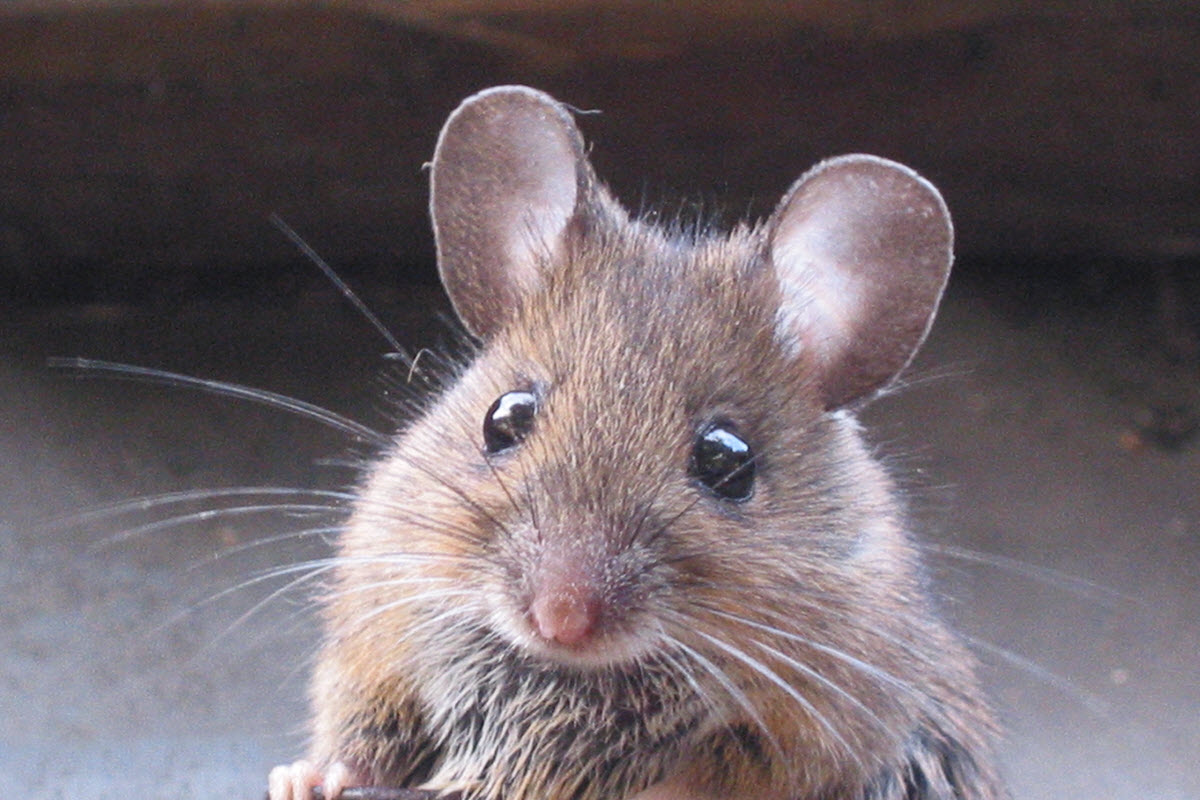
Wood mouse in Iceland
Iceland's four rodent species
The four rodents found in Iceland belong to two familiar groups: mice and rats. Their distribution is not identical, and it is useful to separate species that thrive in open vegetation from those that depend more heavily on human buildings and supplies.
Wood mouse
The wood mouse (Apodemus sylvaticus), called hagamús in Icelandic, is the rodent most closely associated with Iceland's open countryside. It is widespread in vegetated lowland habitats and may live in grassland, heath, woodland, lava covered by plants, gardens and sheltered ground below cliffs. Wood mice are agile, mostly nocturnal animals with brown upperparts, a paler underside, relatively large eyes and ears, and a long tail.
Wood mice eat a varied diet that can include seeds, berries, green plant material and small invertebrates. Their ability to use many food sources helps them survive Iceland's short growing season and changeable weather. They do not hibernate. Instead, they remain active through the year, using sheltered nests and stored food when winter conditions are difficult.
Iceland lies near the northern and western edge of the species' range. Wood mice have long been monitored by Icelandic natural scientists, partly because changes in numbers, breeding and body condition can reveal how small mammals respond to weather and local habitat conditions.
House mouse
The house mouse (Mus musculus), or húsamús, is smaller and more closely linked to people. It is most often found in or near houses, barns, stables, warehouses and other buildings that offer warmth, shelter and food. Colour varies, but house mice are commonly grey-brown with a lighter underside. Their ears and eyes are proportionally smaller than those of a wood mouse.
House mice probably became established when the first settlers brought livestock, food and cargo to Iceland in the late ninth or early tenth century. They can breed rapidly where conditions are favourable, so a few animals inside a building can become an infestation. Outdoors they need dry shelter and dependable food, which is why most Icelandic populations remain closely connected with human activity.
The Westman Islands are a notable exception. House mice have lived outdoors there in natural habitats for many centuries, historically without competition from wood mice. Wood mice were confirmed on Heimaey in the early 2020s, creating a rare opportunity for researchers to observe how the two species share or compete for habitat.
Brown rat
The brown rat (Rattus norvegicus), known as brúnrotta, is much larger and more robust than either mouse species. It arrived in Iceland through human transport during the eighteenth century. Brown rats are strongly associated with settlements, ports, farms, waste, sewers and food storage. They are capable swimmers and usually keep close to cover.
Brown rats are not distributed evenly across Iceland. They occur mainly where human activity provides reliable shelter and food, and are especially familiar in the more populated south-west. Clean storage, sealed openings and careful waste management are therefore more important than landscape or region when it comes to preventing them around buildings.
Black rat
The black rat (Rattus rattus), or svartrotta, is the least familiar of Iceland's four rodents. It was introduced later than the brown rat and is much more restricted. The species has been recorded in the Westman Islands, where brown rats are absent. Despite its name, a black rat is not always black; colour can range from dark brown to grey, and the tail is typically longer in relation to the body than that of a brown rat.
How rodents reached Iceland
The Arctic fox is Iceland's only native terrestrial mammal. Every resident rodent reached the island with people. Archaeological and biological evidence indicates that wood mice and house mice travelled in ships, cargo, fodder or food stores used by Iceland's early settlers. Their populations were established by the late ninth or early tenth century.
Rats arrived much later as international shipping expanded. Brown and black rats were accidentally transported in vessels and goods during and after the late eighteenth century. Ports and trading settlements provided the shelter and food that allowed them to persist. Modern freight can still move rodents between places, which is why prevention and early detection matter on an island.
Where rodents live in Iceland
Wood mice are the only Icelandic rodents commonly found well away from buildings. They favour places with plant cover, nesting material and access to seeds or other food. In exposed highlands and barren ground, food and shelter are too limited for stable populations. They are therefore more likely in lowlands, sheltered valleys, vegetated coastal slopes and around gardens or woodland.
House mice and both rat species live mainly within the human landscape. Farms, fishing harbours, warehouses, food businesses and homes can all provide suitable conditions. Their presence is highly local: a rodent may be common around one group of buildings and absent from apparently similar places nearby.
Seasons and signs of activity
Rodents are present throughout the year, but people often notice them in autumn when temperatures fall and animals seek shelter. Wood mouse numbers commonly rise after the summer breeding season, while house mice can reproduce whenever warmth and food are available. Most activity takes place after dark.
A brief sighting is not the only sign. Small footprints, gnaw marks, rustling inside walls, nesting material and droppings may reveal activity around a building. Species are not always easy to identify from a quick glimpse, so size, tail length, colouring and location should all be considered. Never handle a live or dead rodent with bare hands.
Rodents in Iceland's ecosystems
Although introduced, wood mice have been part of Iceland's terrestrial food web for roughly a thousand years. They consume seeds and invertebrates and in turn can be prey for Arctic foxes, birds of prey and other predators. Their abundance varies between years and places, affecting the availability of food for animals that hunt them.
Rodents can also cause problems. Mice and rats may damage stored food and materials, and introduced rodents can be harmful when they reach sensitive islands or bird colonies. Keeping food secure, carrying rubbish away and never releasing pet rodents are simple but important precautions.
How to observe rodents responsibly
Rodents are not a wildlife attraction that should be baited or handled. If you happen to see a wood mouse outdoors, watch quietly from a short distance and let it move away. Do not disturb nests, place food near paths or buildings, or move an animal to another location.
Inside accommodation, tell the host or property manager rather than trying to handle the animal yourself. Around farms and working harbours, respect private property and do not touch traps or bait stations. Good hygiene and secure food storage protect people, livestock, wildlife and buildings alike.
Frequently asked questions about rodents in Iceland
Are there wild mice in Iceland?
Yes. Wood mice live wild in vegetated habitats across much of the country. House mice are also established, but most populations live in or near buildings; the Westman Islands have a notable long-established outdoor population.
How many rodent species live in Iceland?
Four species are established: wood mouse, house mouse, brown rat and black rat.
Are any rodents native to Iceland?
No. Wood mice and house mice were introduced accidentally around the settlement period, while rats arrived later through shipping and trade.
Are there rats in Iceland?
Yes. Brown rats occur mainly around human settlements and are especially familiar in the south-west. Black rats have a much more restricted distribution and are known from the Westman Islands.
Do mice hibernate in Iceland?
No. Iceland's mice remain active throughout the year. They use sheltered nests, buildings and stored food to cope with winter conditions.
What is the difference between a wood mouse and a house mouse?
A wood mouse generally has larger eyes and ears, a longer tail and a clearer contrast between brown upperparts and a pale underside. It is common in open vegetation. A house mouse is smaller-featured and is usually found close to people and buildings.
Can visitors see rodents in the Icelandic countryside?
A quiet observer may occasionally see a wood mouse at dusk or after dark, particularly in sheltered vegetated areas. Sightings are unpredictable, and rodents should never be fed or disturbed.
What should I do if I see a mouse or rat indoors?
Keep food closed, avoid touching the animal or droppings, and inform the host, property manager or local pest-control professional. Do not move the rodent to another area.