Hallgrímskirkja
Hallgrímskirkja is Reykjavík’s landmark church, rising 73 metres above Skólavörðuholt with a tower viewpoint, striking modern Icelandic architecture and one of the country’s great concert organs. This guide covers current visitor hours, tower tickets, architecture, music, respectful visiting and city tours that fit naturally around the church.
Quick guide to Hallgrímskirkja
| What it is | Iceland’s largest church and Reykjavík’s most recognisable landmark |
|---|---|
| Address | Hallgrímstorg 1, 101 Reykjavík |
| Summer hours | Church daily 09:00–20:00; tower daily 09:00–19:45 |
| Winter hours | Church daily 10:00–17:00; tower daily 10:00–16:45 |
| Admission | Church entry is free; a ticket is required for the tower |
| Best time | Early morning or late afternoon, preferably on a clear day for the tower view |
| Good to know | This is an active church; services, ceremonies and concerts can temporarily limit access |
| Coordinates | 64.1417951, -21.9267103 |
Why visit Hallgrímskirkja?
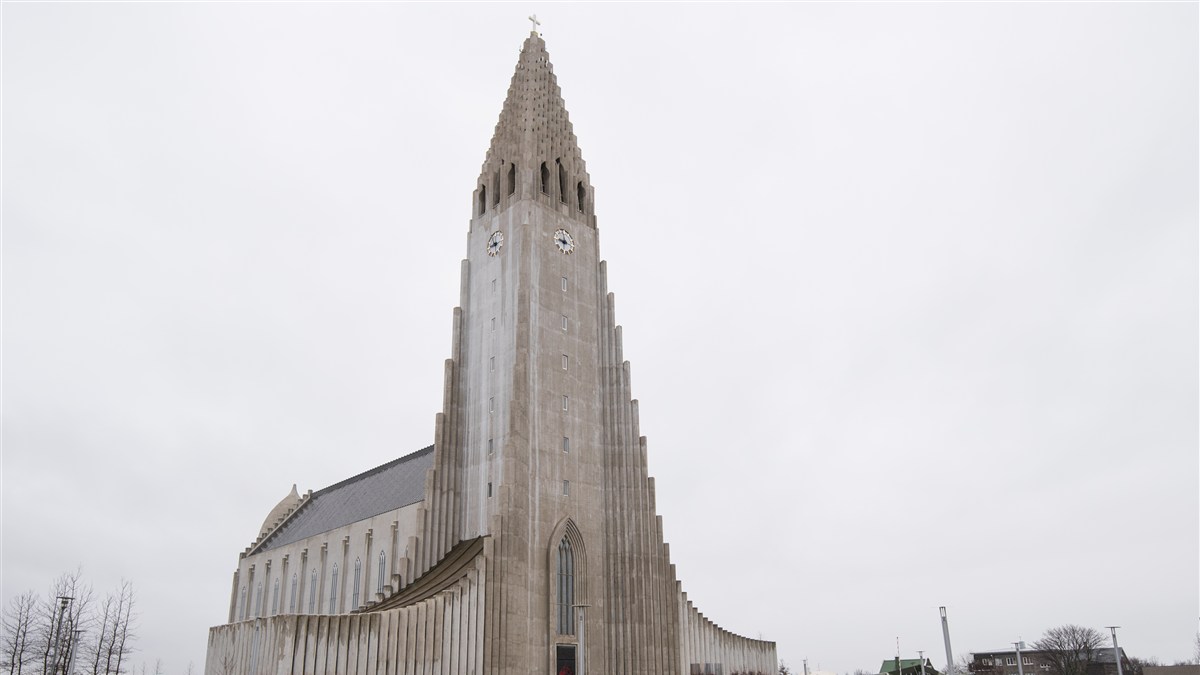
Hallgrímskirkja rises above central Reykjavík from the top of Skólavörðustígur, the colourful street that climbs towards the church from the city centre. At 73 metres it is both Iceland’s largest church and one of the capital’s defining landmarks. The exterior, tower view, luminous nave, monumental organ and Leif Erikson statue make it far more than a quick photo stop.
The church is also a working place of worship. Visitors share the space with services, funerals, weddings, rehearsals and concerts, so a thoughtful visit balances sightseeing with respect for what is happening inside. Church entry is free. The tower requires a separate ticket and can close temporarily even when the nave remains open.
Architecture inspired by the Icelandic landscape
State architect Guðjón Samúelsson began designing Hallgrímskirkja in 1937. His composition turns the church into a vertical Icelandic landscape: stepped wings rise towards the central tower like rows of basalt columns, while the pale concrete and strong silhouette suggest mountains, glaciers and lava formations. The result is modern rather than a copy of a medieval church, but it feels unmistakably connected to Iceland.
Construction began in 1945 and continued in stages for more than four decades. The tower and side wings were completed before the nave, and the finished church was consecrated in 1986. Walk around the building before going inside: the symmetry is clearest from the lower end of Hallgrímstorg, while the side elevations show how the repeated concrete forms gather momentum towards the tower.
The tower view over Reykjavík
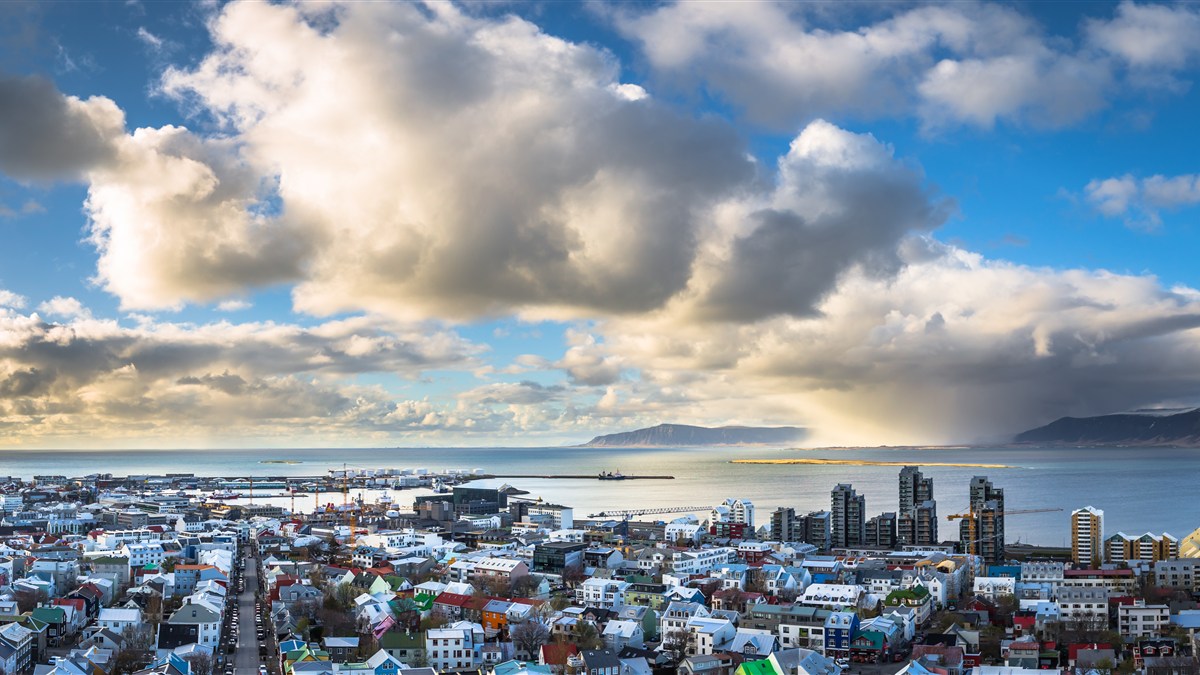
The tower is the main paid visitor experience. From the upper viewing level, coloured roofs spread across the old city and Faxaflói Bay opens beyond the harbour. In clear conditions you can pick out Harpa, the shoreline by the Sun Voyager, Perlan on Öskjuhlíð and the mountains surrounding the capital.
The official page currently lists adult tower admission at ISK 1,500, children aged 7–16 at ISK 200 and a discounted ISK 1,000 ticket for students, seniors and disabled visitors. Tickets are sold in the church shop, cannot be reserved in advance and are valid for one entry on the day of purchase. Prices and access arrangements can change, so confirm them on the official opening-hours and ticket page.
Opening hours and the best time to go
The current general summer schedule is 09:00–20:00 for the church and 09:00–19:45 for the tower. In winter, the church is generally open 10:00–17:00 and the tower 10:00–16:45. These are visitor hours rather than a guarantee of uninterrupted access. Services, ceremonies, concerts, public holidays and maintenance can alter the schedule.
Go early for a quieter nave and softer light on Skólavörðustígur. Late afternoon can be excellent for the tower when the low sun gives the city more depth, but queues are more likely during busy summer periods. Cloud and wind can reduce the value of the view, so keep the tower flexible if your Reykjavík itinerary allows it.
Inside the church and the Klais organ
The interior feels very different from the sculptural exterior. Tall white columns, pointed vaults and restrained decoration draw attention towards light, space and sound. Allow a few quiet minutes in the nave rather than treating it only as the route to the tower.
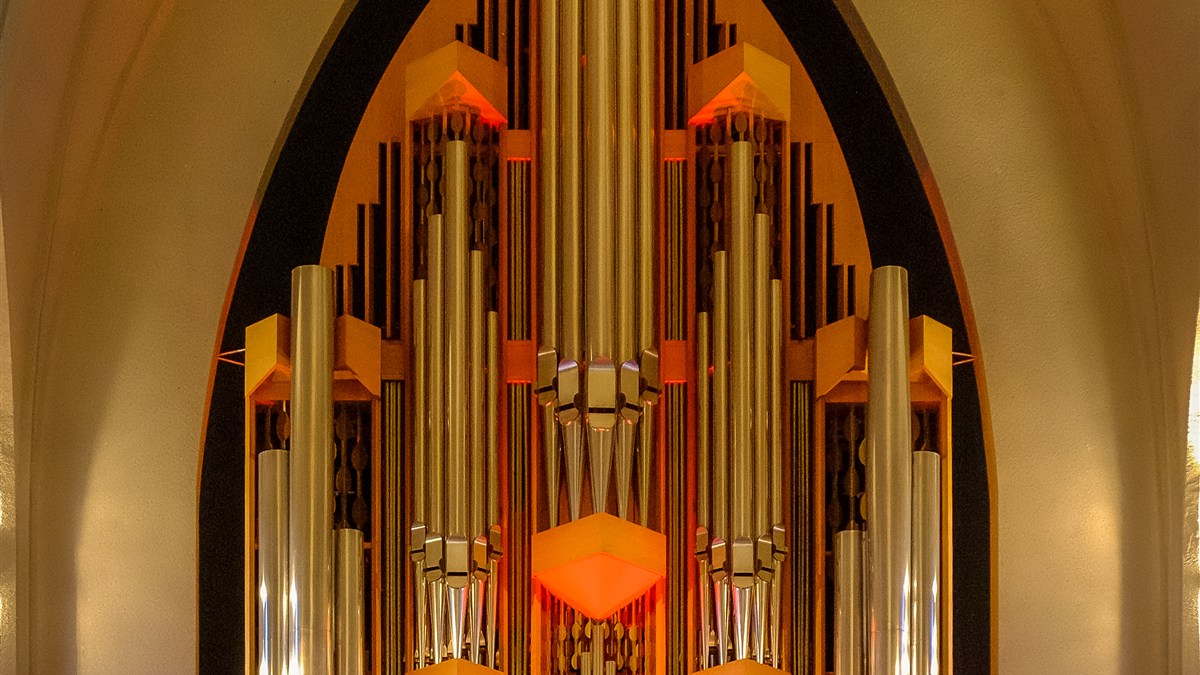
The great concert organ was built by Johannes Klais Orgelbau in Bonn and inaugurated in December 1992. It has four manuals, a pedalboard, 72 stops and 5,275 pipes; the case rises about 15 metres and the instrument weighs roughly 25 tonnes. Organ recitals and concerts reveal the building as an acoustic space as well as an architectural landmark. Check the official organ page and current events calendar if music is important to your visit.
Hallgrímur Pétursson and the Leif Erikson statue
The church is named for Hallgrímur Pétursson, the seventeenth-century Icelandic pastor and poet best known for the Passion Hymns. Hallgrímskirkja is therefore both a parish church and a national memorial connected with Icelandic language, faith and literary history.
Outside, Alexander Stirling Calder’s statue of Leif Erikson faces down Skólavörðustígur. The United States presented it to Iceland in 1930 to mark the millennial anniversary of Alþingi. The statue predates the completed church and now forms one of Reykjavík’s most photographed compositions, especially when the square is quiet.
Getting there and planning a city walk
Hallgrímskirkja is easy to reach on foot from central Reykjavík. Walk uphill along Skólavörðustígur from Laugavegur, allowing time for the street’s shops, galleries and cafés. City buses serve the surrounding neighbourhood, but parking close to the church is limited and often less convenient than walking.
A compact half-day route begins at Hallgrímskirkja, follows Skólavörðustígur downhill, crosses Laugavegur and continues to the waterfront for the Sun Voyager and Harpa. Another option is to combine the church with Perlan, whose viewpoint gives a wider panorama from the opposite side of central Reykjavík.
Respectful visiting
- Keep voices low and phones silent inside the nave.
- Do not cross barriers or photograph people during worship or private ceremonies.
- Follow staff instructions when a service, rehearsal or concert changes visitor access.
- Dress for wind and cold around the tower even when the streets below feel mild.
- Check the official schedule on the day rather than relying on old ticket prices or opening hours.
Reykjavík city tours near Hallgrímskirkja
Hallgrímskirkja is a natural starting point for exploring Reykjavík on foot. These eight live FunIceland tours cover Viking history, folklore, architecture, food and flexible city sightseeing. The cards reuse FunIceland’s shared tour-carousel and live currency functionality.
Frequently asked questions about Hallgrímskirkja
Entry to the church is free. A separate ticket is required for the tower viewpoint.
The official page currently lists ISK 1,500 for adults, ISK 200 for children aged 7–16 and ISK 1,000 for students, seniors and disabled visitors. Check the official page before visiting because prices can change.
General summer hours are 09:00–20:00 for the church and 09:00–19:45 for the tower. General winter hours are 10:00–17:00 and 10:00–16:45 respectively. Services and events can temporarily change access.
The tower is 73 metres high. Its viewing level overlooks central Reykjavík, Faxaflói Bay and the mountains around the capital when conditions are clear.
Yes. It is an Evangelical Lutheran parish church as well as a national landmark, with regular worship, ceremonies, concerts and community activity.
Guðjón Samúelsson’s design uses stepped vertical forms associated with Icelandic basalt, mountains and glaciers. The architecture is modern but deliberately rooted in the national landscape.
He was a seventeenth-century Icelandic pastor and poet, best known for the Passion Hymns. The church serves as a national memorial bearing his name.
The Klais concert organ has 72 stops and 5,275 pipes. It was inaugurated in 1992 and is central to the church’s concert programme.
It depicts Leif Erikson. The United States gave the statue to Iceland in 1930 to mark the thousandth anniversary of Alþingi.
The Private Reykjavík Architecture Walk is the strongest match for design and city history. Walk with a Viking and the Folklore Walk suit storytelling, while the Food Lovers Tour works well after a morning church visit.