Harpa Concert Hall
Harpa is Reykjavík’s landmark concert hall and conference centre, standing beside the old harbour in a shimmering glass façade that changes with the light. This guide covers the architecture, current opening hours, what you can see inside, concerts and guided tours, practical access and city experiences that combine naturally with the waterfront.
Quick guide to Harpa
| What it is | Reykjavík’s concert hall, conference centre and waterfront architectural landmark |
|---|---|
| Address | Austurbakki 2, 101 Reykjavík |
| Building hours | Sunday–Tuesday 10:00–18:00; Wednesday–Saturday 10:00–20:00 |
| Box office | Daily 10:00–18:00 and longer on event nights |
| Admission | Free to enter the public foyer; concerts, exhibitions and guided tours are ticketed |
| Best time | Daylight for the glass geometry, blue hour for reflections and evening illumination |
| Good to know | Opening hours can change for major events; check Harpa’s official programme before travelling |
| Coordinates | 64.1504326, -21.9328535 |
Why visit Harpa?
Harpa is one of the places where contemporary Reykjavík is easiest to understand. It is a working home for music and events, an accessible indoor stop beside the harbour and a piece of architecture that rewards both a quick look and a slow walk. The public foyer opens towards Faxaflói Bay and Mount Esja, while the faceted exterior catches the changing weather and gives the building a different character from hour to hour.
The venue opened in 2011 and has become one of the capital’s most recognisable landmarks. You do not need a concert ticket to enter the public areas during normal building hours. A simple visit can take 20–40 minutes; allow longer if you join a guided tour, stop for food or pair Harpa with the old harbour and the coastal walk.
The glass façade and Icelandic light
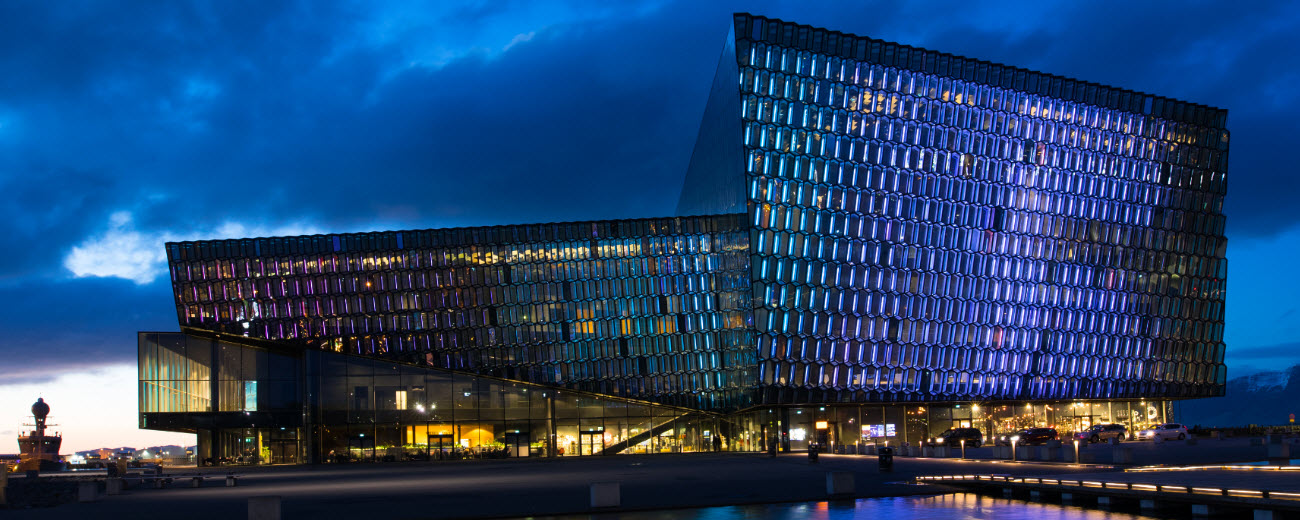
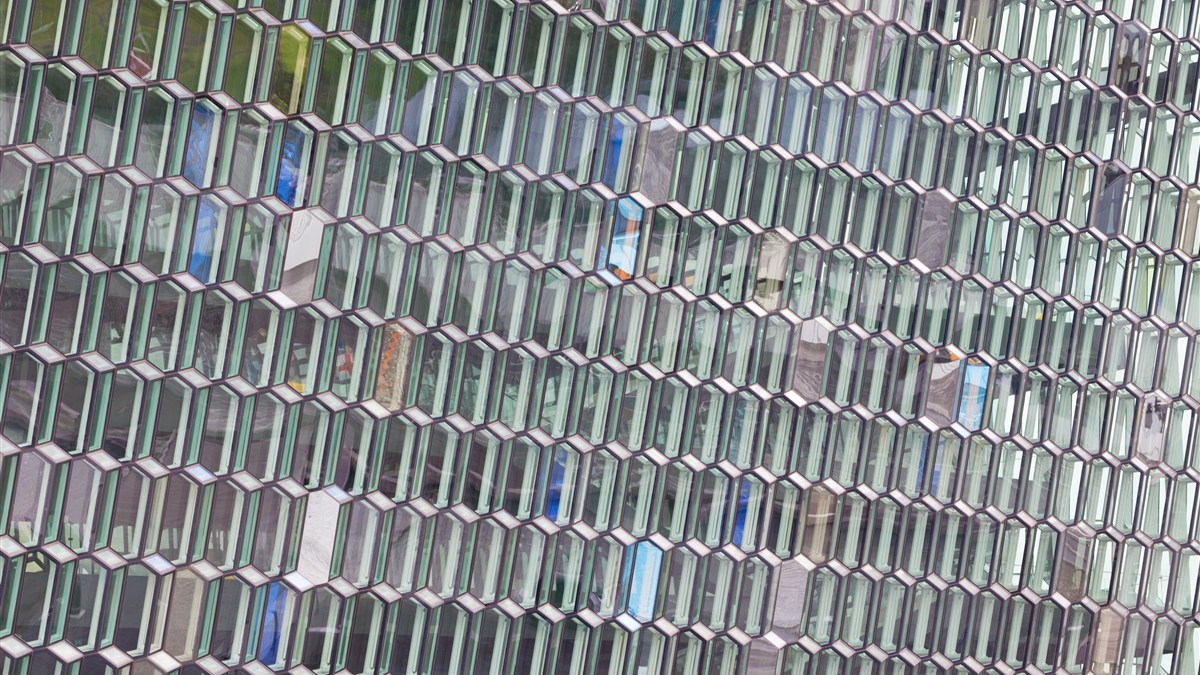
Harpa was designed by Henning Larsen Architects and Batteríið Architects in collaboration with artist Ólafur Elíasson. Its best-known feature is the geometric glass envelope, built from three-dimensional modules that reflect sea, sky, city lights and the movement of people inside. The pattern is often compared with basalt formations, but its effect comes as much from light and repetition as from any single natural reference.
Walk around the south and east sides before going in. From close range, the façade becomes an abstract grid of colour, reflection and depth; from the harbour or across the water, the whole building reads as a luminous edge to the city. On bright days the glass can appear pale green or silver. Around sunset and after dark it becomes warmer and more theatrical.
Inside Harpa
The public foyer is a sequence of broad staircases, bridges, balconies and views through the glass skin. Even without an event ticket, you can appreciate how the exterior geometry filters daylight into the interior. Look back towards the city as well as out to the water: the glass fragments familiar streets and buildings into shifting patterns.
Eldborg is Harpa’s main concert hall and is celebrated for its red interior and acoustics, but it is normally seen during an event or guided tour rather than as part of an unrestricted foyer visit. Harpa is a resident venue for the Iceland Symphony Orchestra and Reykjavík Big Band, and its programme also includes theatre, popular music, conferences, family events and visiting performers.
Opening hours, tickets and guided tours
Harpa currently lists building hours of 10:00–18:00 from Sunday to Tuesday and 10:00–20:00 from Wednesday to Saturday. The box office is open daily 10:00–18:00 and stays open longer on event nights. Major events and holidays can change access, so confirm the day’s details on the official opening-hours page.
Scheduled and private guided tours explain the design, construction story and cultural role of the building. A guided visit can include spaces not normally open to the public, including Eldborg when the programme permits. Tour times vary, so use Harpa’s official guided-tour page rather than relying on an old admission price or timetable.

Food, design and current attractions
Harpa’s current visitor offer includes Hnoss Bistro on the ground floor, La Primavera Ristorante on the fourth floor and the Rammagerðin shop for Icelandic design and crafts. Opening times differ from the building itself, especially around events, so check before making any one of them the main reason for your visit.
The Volcano Express is a separate ticketed cinematic experience inside Harpa, with short shows and a self-guided pre-show area. It is not the former Iceland Expo Pavilion described in older guides. Travellers interested in natural history should compare it with Perlan, where the exhibitions are broader and designed as a longer visit.
Photography at Harpa
The strongest compositions usually come from contrast: transparent glass against concrete, repeated modules against a single person, or the illuminated building against dark water. A wide view works well from the harbour side, while a longer lens helps isolate the honeycomb-like details. Indoors, avoid blocking stairs or event entrances and respect any temporary restrictions.
Blue hour is often the most rewarding time because there is still colour in the sky while the interior lights begin to glow. In strong wind or rain, the public foyer is also a useful sheltered photography stop; drops and reflections can make the glass more dramatic rather than less.
Getting there and combining Harpa with the city
Harpa stands at Austurbakki 2 on the edge of central Reykjavík. It is a short walk from Lækjartorg, one of the city’s main bus hubs, and the harbour-side paths connect it naturally with Grandi and the old harbour to the west. Bicycle stands are available, and the underground car park is open 24 hours with direct access to the building.
For a compact waterfront walk, continue east to the Sun Voyager. For old-city history, walk south through Lækjartorg to Austurvöllur, the Parliament House and Reykjavík Cathedral. A longer loop can climb Skólavörðustígur to Hallgrímskirkja and return through Laugavegur.
Reykjavík city tours near Harpa
Harpa sits between the old city and the harbour, so it is an easy meeting point or finishing stop for city tours. These live FunIceland experiences cover Viking history, folklore, food, architecture and flexible sightseeing.
See also in Reykjavík
Continue exploring with three nearby Reykjavík landmarks.
Frequently asked questions about Harpa
Yes. The public foyer is free to enter during normal building hours. Concerts, exhibitions, cinematic experiences and guided tours have separate tickets.
Harpa currently lists Sunday–Tuesday 10:00–18:00 and Wednesday–Saturday 10:00–20:00. The box office is generally open daily 10:00–18:00 and longer on event nights. Check the official site for changes.
Henning Larsen Architects and Batteríið Architects designed the building in collaboration with artist Ólafur Elíasson, who helped develop the distinctive geometric glass façade.
Eldborg is not normally part of unrestricted foyer access. A scheduled event or guided tour is the best way to see the main concert hall, subject to the day’s programme.
Allow 20–40 minutes for the public foyer and exterior. A guided tour, meal, exhibition or concert turns it into a much longer visit.
Daylight is best for studying the glass geometry. Blue hour and early evening are strongest for coloured reflections and the illuminated building against the harbour.
Yes. Harpa stands on the harbour edge, and pedestrian paths connect it with whale-watching departures, Grandi and the old city.
Harpa has an underground car park that is open 24 hours with direct access to the building. Walking or using city buses is often easier from central Reykjavík.
Harpa currently lists Hnoss Bistro on the ground floor and La Primavera on the fourth floor. Their hours differ from the building and may change around events.
The Private Reykjavík Architecture Walk is the closest match for design. Walk with a Viking and the Folklore Walk suit city history, while the Food Lovers Tour pairs well with an afternoon or evening event.