Lake Mývatn Travel Guide: Things to Do, Nature, Birds and Tours
About the Author

Lake Mývatn Travel Guide: Things to Do, Nature, Birds and Tours
Lake Mývatn is one of North Iceland's great travel hubs: a shallow volcanic lake surrounded by lava castles, pseudocraters, geothermal fields, bird-rich wetlands, crater hikes, hot springs, waterfalls and highland day trips.
This detailed guide brings together the best things to do around Mývatn, how to connect the highlights into a realistic itinerary, why the lake's ecosystem is so special, where the birdlife is strongest, and which Fun Iceland tours fit each part of the area.
Need a simple Mývatn plan?
Start with Lake Mývatn, Goðafoss and the lava landscapes if you have one day. Add Dettifoss, Selfoss or the Diamond Circle if you want a bigger North Iceland route. For a slower nature day, focus on the lake shore, Fuglasafn Sigurgeirs, Skútustaðagígar, Höfði and the Nature Baths.
Jump to
Quick facts: Lake Mývatn at a glance
- Region: North Iceland, in Suður-Þingeyjarsýsla, east of Akureyri and close to Krafla.
- Lake size: about 37 km², making it Iceland's fourth-largest lake.
- Depth: very shallow, with sunlight reaching the lakebed across large areas.
- Outflow: the Laxá river runs from Mývatn and forms part of the protected wetland system.
- Known for: ducks, midges, lava formations, pseudocraters, geothermal fields, crater walks and North Iceland day tours.
- Best base towns: Reykjahlíð by Mývatn, Akureyri for longer day trips, and Húsavík for whale watching combinations.
- Good for: nature lovers, photographers, birdwatchers, families, cruise passengers, geology fans and winter northern lights trips.
What makes Mývatn unusually rewarding is how concentrated it is. In a single day you can walk among lava pillars at Dimmuborgir, look across pseudocraters at Skútustaðir, stand beside steaming mud pots at Hverir, climb the rim of Hverfjall, visit a bird museum, soak in geothermal water and still have time for Goðafoss on the road back to Akureyri.
Best Lake Mývatn tours and guided trips
If you are staying in Akureyri, arriving by cruise ship, or simply want a smoother day, a guided Mývatn tour is often the easiest way to see the area without juggling road conditions, timing, parking and long driving distances. The most popular routes combine Lake Mývatn with Goðafoss, while bigger days add Dettifoss, Selfoss, Nature Baths or the wider Diamond Circle.
Popular Mývatn day tours
These are good starting points if you want the classic lake, lava, waterfall and geothermal highlights in one guided day.

A guided North Iceland day tour linking Lake Mývatn, Goðafoss and the volcanic highlights around the lake.
A North Iceland shore excursion to Lake Mývatn, Goðafoss and volcanic landscapes, planned around cruise timing.
A guided North Iceland day tour linking Lake Mývatn, Goðafoss and the volcanic highlights around the lake.
A North Iceland shore excursion to Lake Mývatn, Goðafoss and volcanic landscapes, planned around cruise timing.
A guided North Iceland day tour linking Lake Mývatn, Goðafoss and the volcanic highlights around the lake.
A North Iceland shore excursion to Lake Mývatn, Goðafoss and volcanic landscapes, planned around cruise timing.
Why Lake Mývatn is so special
Mývatn is not a single-sight destination. It is a living volcanic landscape where lake ecology, lava history and geothermal activity sit side by side. The lake is shallow and richly productive, which helps support a remarkable food chain: algae and aquatic plants, midges, fish, ducks and other wetland birds.
The surrounding land tells a different part of the same story. Lava flowed across wet ground, steam explosions formed pseudocraters, magma chambers collapsed into calderas, mud pots still boil at Hverir, and the Krafla area remains one of Iceland's most active volcanic systems. This is why Mývatn feels so varied: every stop shows a different process at work.
Birdlife, midges and the lake ecosystem
The name Mývatn means “midge lake”, and the midges are not just a summer inconvenience. They are the engine of the ecosystem. Their larvae live in the lake, feed fish and birds, and help explain why the area has such exceptional birdlife.
The lake is famous for ducks and wetland birds. In summer, the variety of duck species around Mývatn is extraordinary, and the mix can include harlequin duck, Barrow's goldeneye, scaup, wigeon, teal, tufted duck, long-tailed duck, red-breasted merganser and more depending on season and location. The lake, islands, reed beds and Laxá river all create different habitats in a compact area.
Because Mývatn and Laxá are protected and internationally important wetlands, the best birdwatching is quiet and respectful. Keep to marked paths, avoid walking into nesting areas, use binoculars or a long lens, and give birds space, especially in spring and early summer.
Fuglasafn Sigurgeirs: the bird museum by Mývatn
Fuglasafn Sigurgeirs is one of the most useful stops for understanding Mývatn before or after exploring the shoreline. The museum opened in 2008 and focuses on birds, the lake's ecosystem and the ways local people have lived with and used Mývatn through time.
It is especially good on a mixed-weather day, for families, and for anyone who wants to put names to the birds they are seeing outside. Visiting the museum before walking at Skútustaðagígar or Höfði makes the landscape feel more alive, because you start noticing how the lake, insects, vegetation and nesting birds fit together.
Things to do around Lake Mývatn
Dimmuborgir lava fields
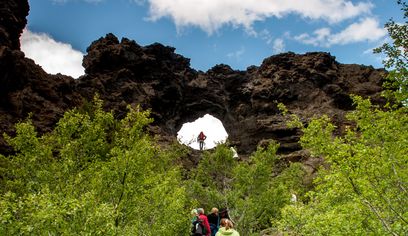
Dimmuborgir means “dark castles”, and the name fits. The area is made of dramatic lava pillars, arches and rock walls formed when lava moved over wet ground and steam shaped strange standing formations. It is one of the most atmospheric short-walk areas in North Iceland.
Stay on marked paths here. The formations are fragile, and the site is much better enjoyed slowly: look for openings, silhouettes, natural windows and the way low birch growth softens the black lava.
Hverfjall crater
Hverfjall is a near-symmetrical tephra crater, roughly 1 km across and about 140 m deep. The climb is straightforward in good conditions but exposed, and the reward is a wide view over Mývatn, Dimmuborgir and the surrounding volcanic terrain.
Skútustaðagígar pseudocraters
The Skútustaðir pseudocraters were not volcanic vents in the normal sense. They were formed by steam explosions when hot lava flowed over wetland. Today they are one of the best gentle walking and birdwatching areas around the lake.
Höfði and Kálfaströnd
Höfði is a peaceful lakeside headland with walking paths, birch trees, water views and unusual lava formations along Kálfaströnd. It is a strong choice if you want a softer, greener contrast to the stark lava and geothermal stops.
Grjótagjá cave
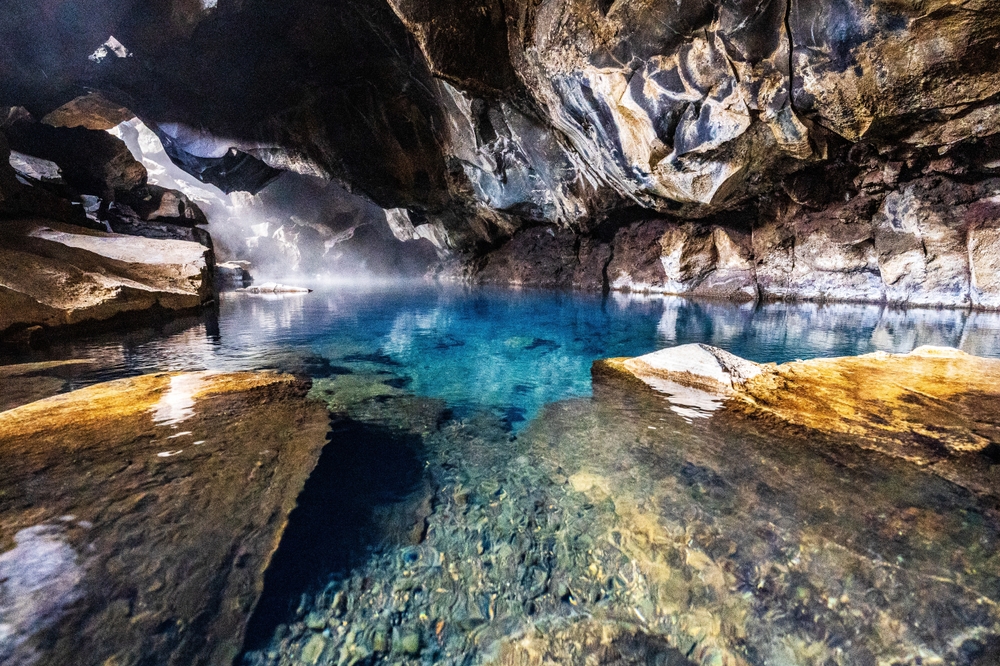
Grjótagjá is a small lava cave with vivid blue geothermal water. It was once used for bathing, but volcanic activity in the Krafla Fires period made the water too hot and unstable for safe bathing. Today it is a look-but-do-not-enter stop.
Private and flexible Mývatn tours
Private tours work well if you want more time at birdlife stops, Fuglasafn Sigurgeirs, photography locations or a custom route from Akureyri, Húsavík or Mývatn.

A guided North Iceland day tour linking Lake Mývatn, Goðafoss and the volcanic highlights around the lake.
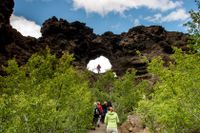
A guided North Iceland day tour linking Lake Mývatn, Goðafoss and the volcanic highlights around the lake.

A guided North Iceland day tour linking Lake Mývatn, Goðafoss and the volcanic highlights around the lake.
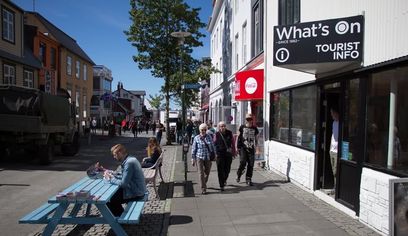
A North Iceland shore excursion to Lake Mývatn, Goðafoss and volcanic landscapes, planned around cruise timing.
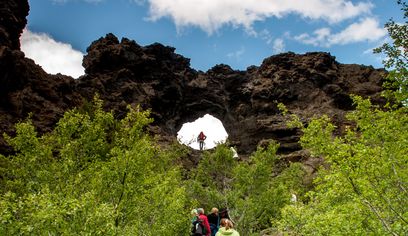
A guided North Iceland day tour linking Lake Mývatn, Goðafoss and the volcanic highlights around the lake.
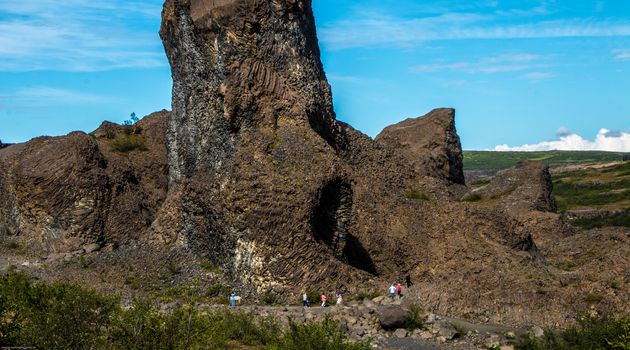
A guided North Iceland day tour linking Lake Mývatn, Goðafoss and the volcanic highlights around the lake.
Hverir, Krafla, Leirhnjúkur and the geothermal side of Mývatn
East of Mývatn, the landscape changes fast. Hverir at Námafjall is a high-temperature geothermal field with fumaroles, steam vents and bubbling mud pots. It is one of the easiest places in Iceland to see active geothermal power at the surface, but it deserves caution: stay on marked paths and keep children close.
Krafla adds the bigger volcanic context. The caldera, Víti crater and Leirhnjúkur lava fields show a landscape shaped by eruptions, rifting and still-warm ground. The Krafla Fires from 1975 to 1984 are a reminder that this is not ancient scenery only; it is a living volcanic area.
Mývatn Nature Baths are the relaxed ending to this theme. They are not a wild hot spring, but they are a scenic geothermal bathing stop with views over the North Iceland landscape. For many travelers, a bath after lava fields and waterfalls is the day landing perfectly.
Waterfalls near Mývatn: Goðafoss, Dettifoss and Selfoss
Goðafoss is the easiest waterfall to connect with Mývatn, especially from Akureyri. It sits close to Route 1 and works beautifully as the first or last stop of the day. Dettifoss and Selfoss belong to the bigger Diamond Circle route and make the day longer, wilder and more dramatic.
Aldeyjarfoss is another standout for photographers, with white water dropping through dark basalt columns, but it needs more planning and seasonal road awareness. If you are building a North Iceland waterfall day, do not underestimate distances: the map looks simple, but road choice, weather and gravel sections can change the rhythm.
Mývatn, Diamond Circle and waterfall tours
Choose these if Dettifoss, Selfoss, Goðafoss or a wider Diamond Circle route is the main goal.

A guided North Iceland day tour linking Lake Mývatn, Goðafoss and the volcanic highlights around the lake.
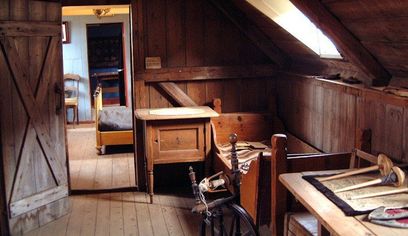
A guided North Iceland day tour linking Lake Mývatn, Goðafoss and the volcanic highlights around the lake.

A guided North Iceland day tour linking Lake Mývatn, Goðafoss and the volcanic highlights around the lake.
A guided North Iceland day tour linking Lake Mývatn, Goðafoss and the volcanic highlights around the lake.
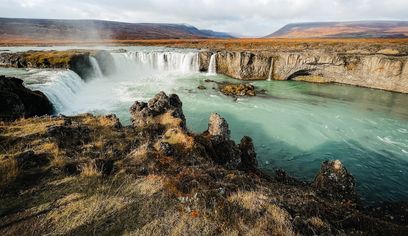
A guided North Iceland day tour linking Lake Mývatn, Goðafoss and the volcanic highlights around the lake.

A guided North Iceland day tour linking Lake Mývatn, Goðafoss and the volcanic highlights around the lake.
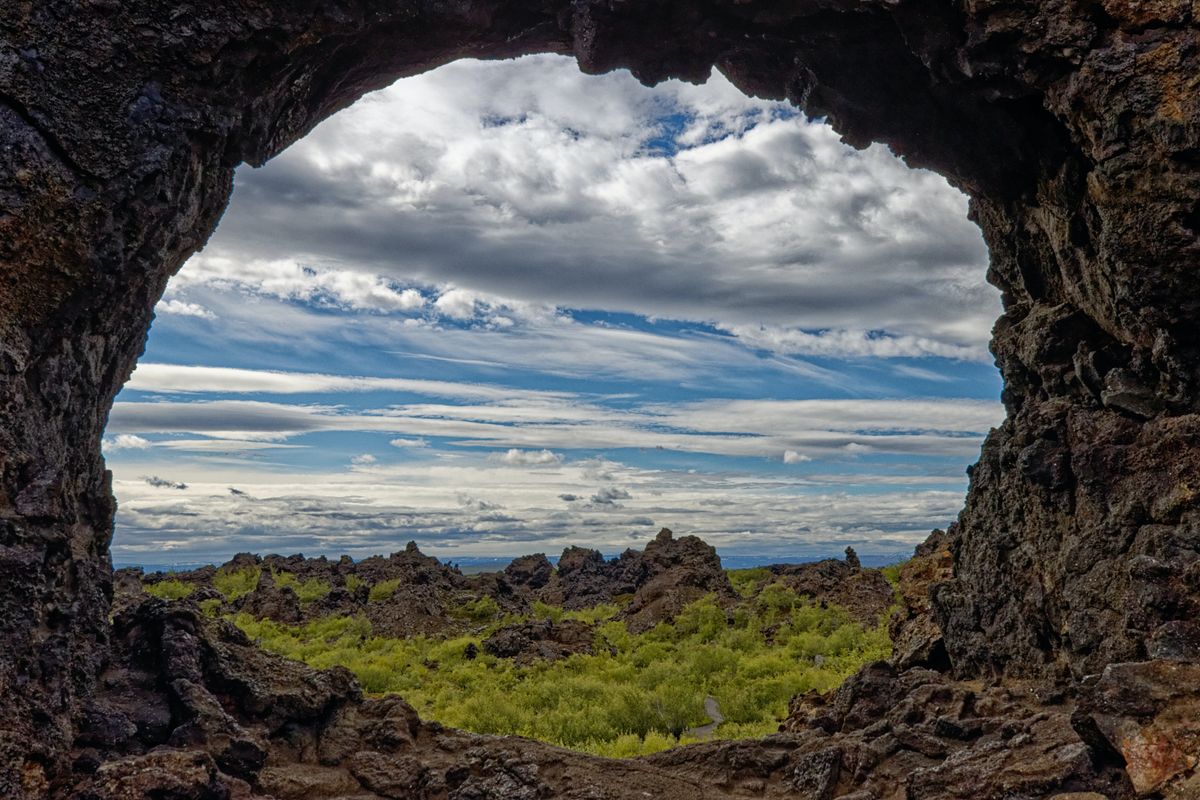
A guided North Iceland day tour linking Lake Mývatn, Goðafoss and the volcanic highlights around the lake.
Adventure tours near Mývatn
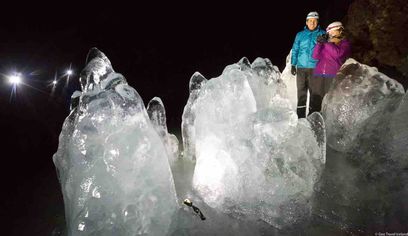
Mývatn is also a gateway to more unusual North Iceland experiences. Askja takes you deep into the highlands when conditions allow. Lofthellir adds a lava cave and ice formations. Winter and shoulder-season options can include snowmobiling, husky experiences and northern lights hunting. In summer, bike-and-bath style tours make the area feel more local and slow-paced.
These are the tours to consider when you already know the classic Mývatn stops, or when you want the area to feel less like a sightseeing checklist and more like an active day out.
Adventure and special-interest tours around Mývatn
Snowmobiling, Askja, Lofthellir, biking, huskies and pop-culture themed tours add a different layer to the Mývatn area.
A guided North Iceland day tour linking Lake Mývatn, Goðafoss and the volcanic highlights around the lake.

A guided North Iceland day tour linking Lake Mývatn, Goðafoss and the volcanic highlights around the lake.

A guided North Iceland day tour linking Lake Mývatn, Goðafoss and the volcanic highlights around the lake.

A guided North Iceland day tour linking Lake Mývatn, Goðafoss and the volcanic highlights around the lake.

A guided North Iceland day tour linking Lake Mývatn, Goðafoss and the volcanic highlights around the lake.

A guided North Iceland day tour linking Lake Mývatn, Goðafoss and the volcanic highlights around the lake.

A guided North Iceland day tour linking Lake Mývatn, Goðafoss and the volcanic highlights around the lake.

A guided North Iceland day tour linking Lake Mývatn, Goðafoss and the volcanic highlights around the lake.

A guided North Iceland day tour linking Lake Mývatn, Goðafoss and the volcanic highlights around the lake.

A guided North Iceland day tour linking Lake Mývatn, Goðafoss and the volcanic highlights around the lake.
Mývatn shore excursions from Akureyri and Húsavík
For cruise passengers, Mývatn is one of the strongest day trips from Akureyri and Húsavík. The key is timing. You want a route that respects ship arrival and departure, keeps driving realistic, and prioritizes the stops that give the biggest sense of North Iceland: Goðafoss, Dimmuborgir, Skútustaðagígar, Hverir and the lake views.
Cruise-friendly Mývatn shore excursions
These tours are built around port timing, guided transport and the most practical highlights from Akureyri or Húsavík.
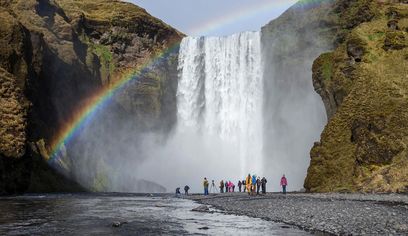
A North Iceland shore excursion to Lake Mývatn, Goðafoss and volcanic landscapes, planned around cruise timing.
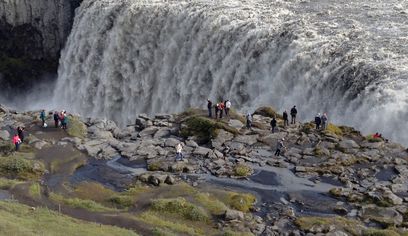
A North Iceland shore excursion to Lake Mývatn, Goðafoss and volcanic landscapes, planned around cruise timing.
A North Iceland shore excursion to Lake Mývatn, Goðafoss and volcanic landscapes, planned around cruise timing.
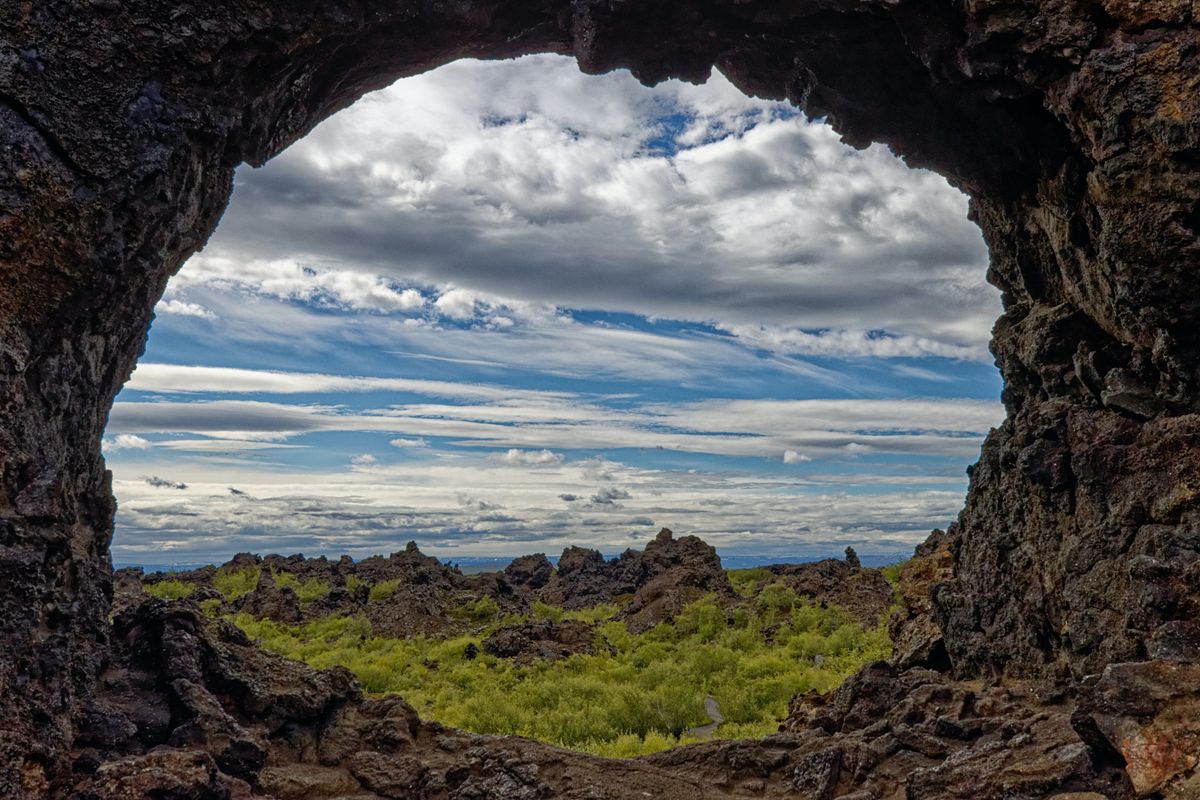
A North Iceland shore excursion to Lake Mývatn, Goðafoss and volcanic landscapes, planned around cruise timing.
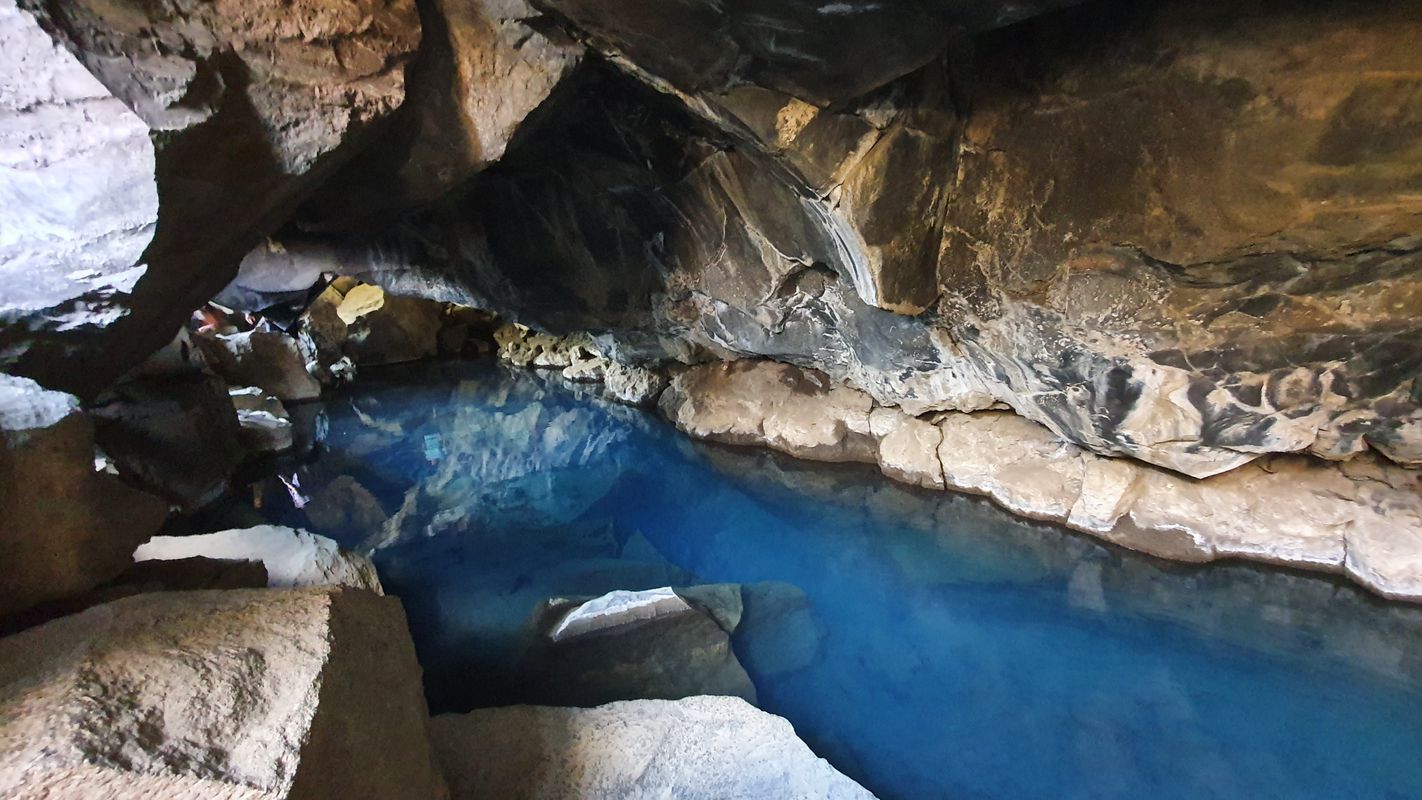
A North Iceland shore excursion to Lake Mývatn, Goðafoss and volcanic landscapes, planned around cruise timing.
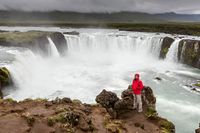
A guided North Iceland day tour linking Lake Mývatn, Goðafoss and the volcanic highlights around the lake.
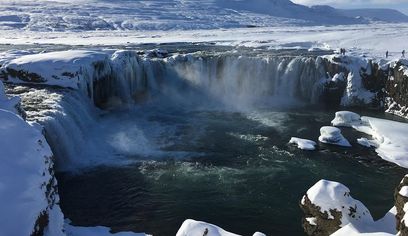
A guided North Iceland day tour linking Lake Mývatn, Goðafoss and the volcanic highlights around the lake.
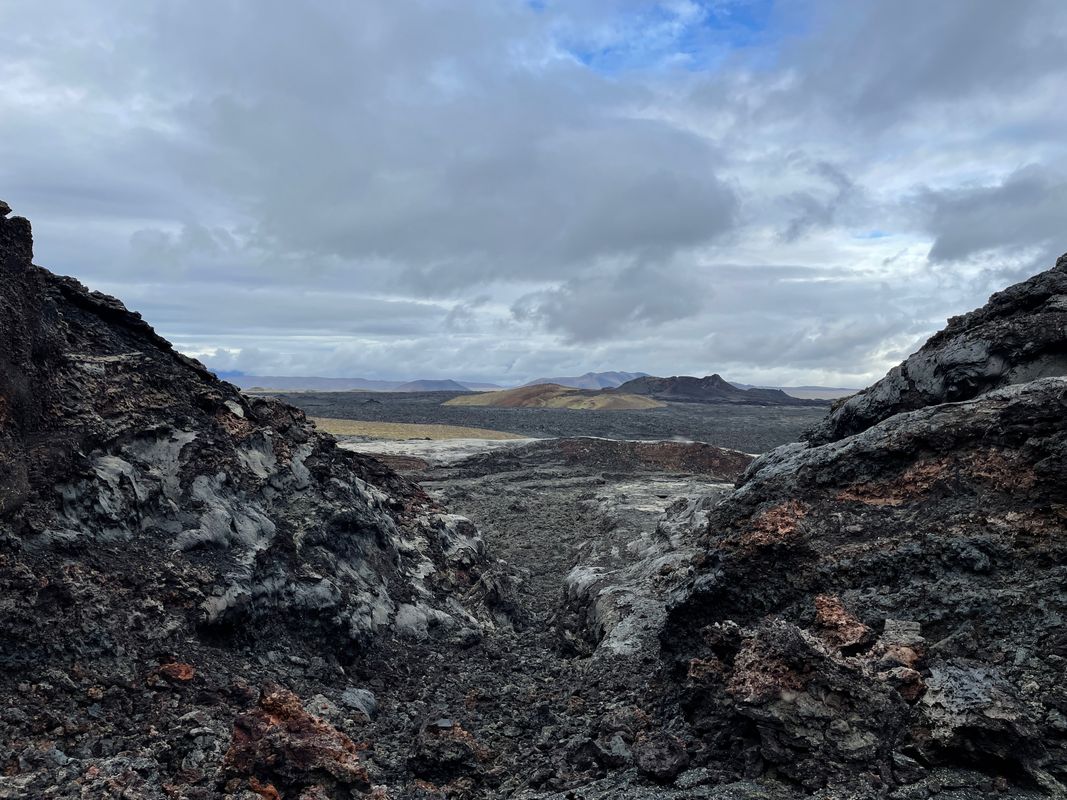
A guided North Iceland day tour linking Lake Mývatn, Goðafoss and the volcanic highlights around the lake.
A guided North Iceland day tour linking Lake Mývatn, Goðafoss and the volcanic highlights around the lake.
What to see nearby
Húsavík and whale watching
Húsavík is close enough to combine with the wider region, especially if you are staying more than one night. It is known as one of Iceland's whale watching capitals, and it pairs naturally with Mývatn for travelers who want both lake ecology and marine wildlife.
Ásbyrgi and Jökulsárgljúfur
Ásbyrgi canyon and the Jökulsárgljúfur area extend the Diamond Circle into bigger landscapes: horseshoe-shaped cliffs, birch woodland, river canyons and the powerful Jökulsá á Fjöllum system.
Akureyri
Akureyri is the easiest urban base for many travelers. It gives you restaurants, accommodation, airport access and cruise connections, while Mývatn remains realistic as a guided day tour.
Suggested Mývatn itineraries
One day from Akureyri: classic Mývatn and Goðafoss
Start with Goðafoss, continue to Skútustaðagígar, Dimmuborgir, Hverfjall views, Hverir and a lakeside stop. If time allows, end at Mývatn Nature Baths before returning.
One slow day based at Mývatn: birds, lake and geothermal bathing
Begin at Fuglasafn Sigurgeirs, walk Skútustaðagígar, stop at Höfði and Kálfaströnd, have lunch locally, then choose Dimmuborgir or Nature Baths for the afternoon.
Long day: Diamond Circle highlights
Combine Mývatn with Dettifoss, Selfoss, Ásbyrgi and Húsavík if you have a full day and good conditions. This is a bigger driving day, best done with guidance or a clear plan.
Adventure day: Askja, Lofthellir or snowmobile
Pick one big adventure rather than trying to force everything into one route. Askja and Lofthellir are destination experiences in themselves; snowmobiling or biking can pair better with a shorter sightseeing loop.
Planning tips for Lake Mývatn
- Do not rush every stop: Mývatn is at its best when you have time for short walks and quiet viewpoints.
- Respect protected areas: keep to marked paths, especially around nesting birds, pseudocraters and fragile lava.
- Expect midges in summer: bring a head net if you are sensitive, especially on still days by the lake.
- Check road conditions: winter, gravel routes and highland trips can change quickly.
- Layer clothing: geothermal areas can be warm and still, crater rims can be windy, and waterfalls can be wet and cold.
- Book cruise days early: the best small-group and private shore excursions can fill when ships are in port.
FAQ: Lake Mývatn travel questions
One full day is enough for the classic highlights, but two days is better if you want birds, museums, geothermal bathing and a wider Diamond Circle or adventure tour.
More Lake Mývatn tours

A North Iceland shore excursion to Lake Mývatn and Goðafoss, planned for strong scenery within cruise timing.

A North Iceland shore excursion to Lake Mývatn and Goðafoss, planned for strong scenery within cruise timing.

A Lake Mývatn day tour with Goðafoss, lava landscapes, geothermal areas and North Iceland scenery in one well-paced route.

A Lake Mývatn day tour with Goðafoss, lava landscapes, geothermal areas and North Iceland scenery in one well-paced route.

A Lake Mývatn tour with Goðafoss, geothermal landscapes and time for warm North Iceland bathing when included in the route.

A Diamond Circle route with Lake Mývatn, Goðafoss and Dettifoss, built for travellers who want North Iceland's bigger natural cont...

A Super Jeep tour to Lofthellir, combining rugged Mývatn lava landscapes with rare natural ice formations inside a lava cave.

A Diamond Circle route with Lake Mývatn, Goðafoss and Dettifoss, built for travellers who want North Iceland's bigger natural cont...