Höfði House – Reykjavík summit landmark
Höfði House is a small white timber landmark on Reykjavík’s waterfront with an outsized place in international history. Built in 1909, it served diplomats, writers and the city before hosting the 1986 Reagan–Gorbachev summit. This guide covers the house’s story, architecture, present-day access and an easy Sæbraut walking route.
Quick guide to Höfði House
| What it is | Historic city reception house and site of the 1986 Reykjavík Summit |
|---|---|
| Address | Borgartún 1, 105 Reykjavík |
| Built | 1909 for French consul Jean-Paul Brillouin |
| Visitor access | Exterior and grounds are normally the visit; the interior opens only for selected events |
| Time to allow | 20–40 minutes, or longer as part of a waterfront walk |
| Cost | Free to view from the public grounds |
| Best light | Morning for the front façade; evening for waterfront atmosphere |
| Coordinates | 64.1465206, -21.9063601 |
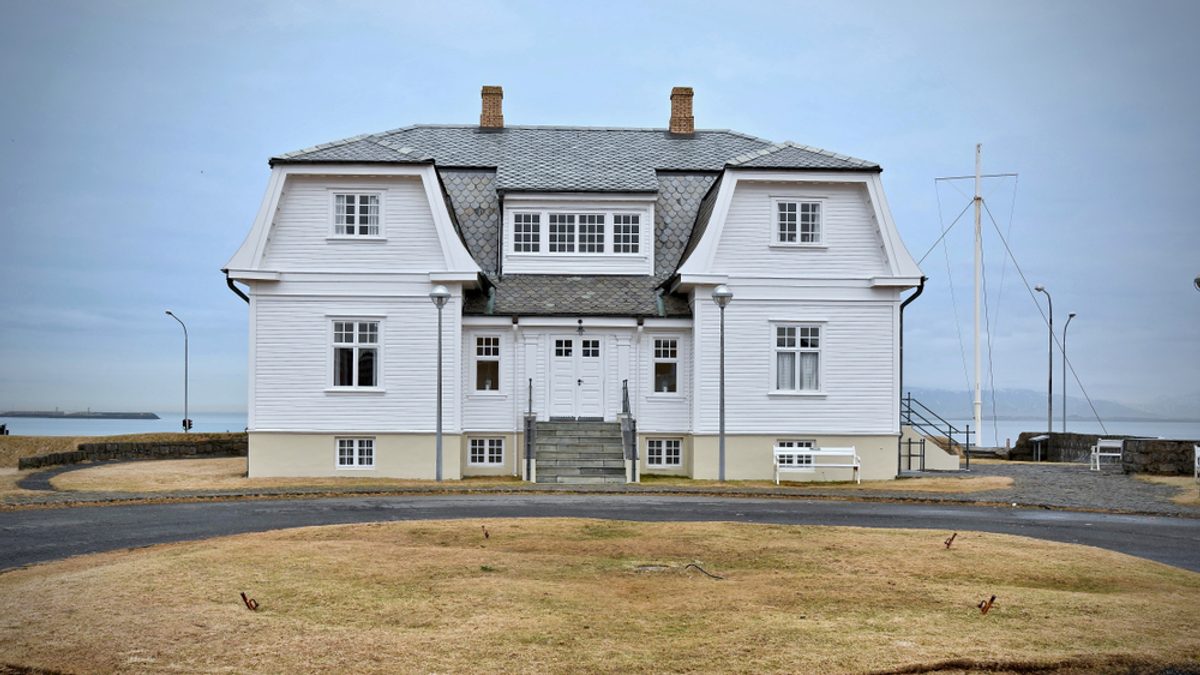
Why visit Höfði House?
Höfði is easy to underestimate. The building is modest beside modern Borgartún, yet its rooms have hosted diplomats, political leaders, artists and writers for more than a century. Its best-known moment—the October 1986 meeting between Ronald Reagan and Mikhail Gorbachev—placed Reykjavík at the centre of Cold War diplomacy.
The stop works especially well on foot or bicycle. Höfði stands beside the Sæbraut waterfront route, with open views across Faxaflói towards Mount Esja. Even when the interior is closed, interpretation, architecture and the coastal setting make the grounds worth a short visit.
A Norwegian-designed house from 1909
Höfði was built for Jean-Paul Brillouin, the French consul in Iceland. The timber house was designed in eastern Norway and shipped to Reykjavík as prepared components. Its appearance combines Art Nouveau influence with neo-baroque form and Norwegian national romantic details.
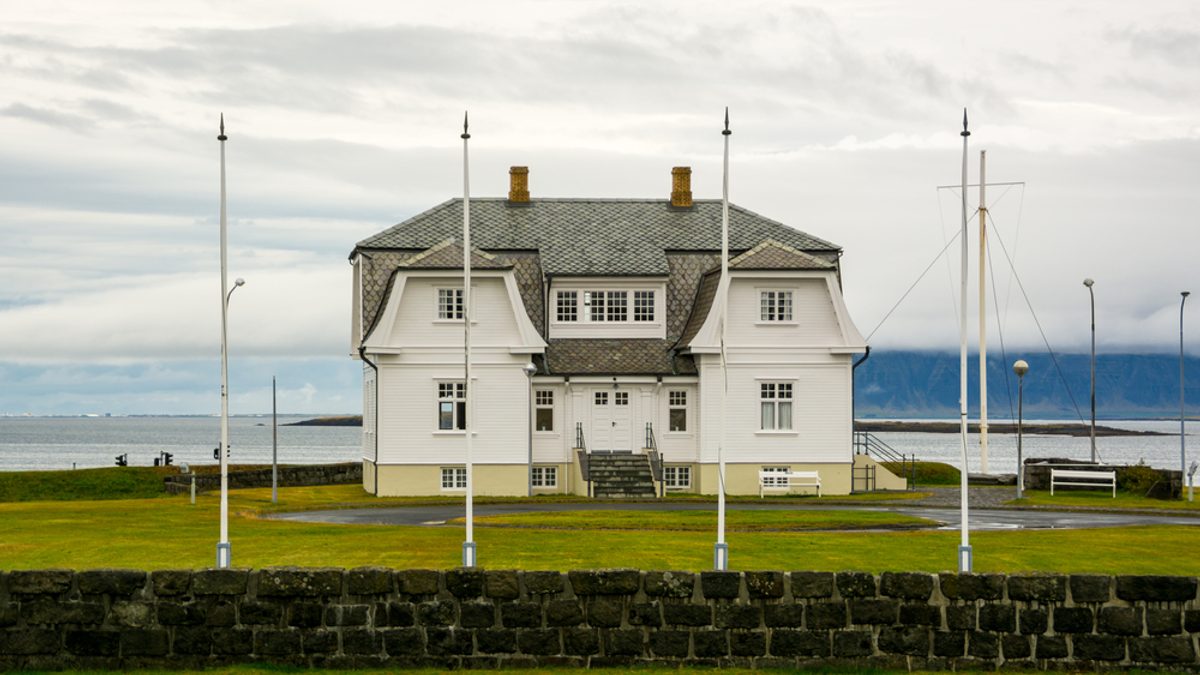
The symmetrical white façade, steep roof, curved dormers and carefully proportioned windows create a formal presence without monumental scale. The house’s original diplomatic purpose is still visible in its dignified entrance and reception rooms.
Residents, poets and diplomats
After Brillouin, the poet and entrepreneur Einar Benediktsson lived at Höfði with his family. The family of physician Matthías Einarsson later became the house’s longest private residents. These years connect the building not only with diplomacy but also with Icelandic literature, business and Reykjavík society.
From 1938, Höfði served as the British consul’s and later ambassador’s residence. Winston Churchill and Marlene Dietrich were among the wartime-era visitors recorded in the house’s history. Reykjavík City bought Höfði in 1958, restored it and has used it for official receptions since 1967.
The 1986 Reykjavík Summit
On 11–12 October 1986, United States President Ronald Reagan and Soviet leader Mikhail Gorbachev met at Höfði. The talks did not end with a signed agreement in Reykjavík, but the leaders discussed nuclear arms reductions at an unprecedented level and created momentum for later negotiations.
The summit is widely remembered as a turning point near the end of the Cold War. Höfði’s compact rooms and Reykjavík’s position between North America and Europe gave the meeting an unusually focused setting. The event remains the reason many international visitors seek out the house.
Other diplomatic milestones
Höfði has continued to serve Reykjavík as a reception venue after the summit. In August 1991, a declaration recognising the restored independence of the Baltic states was signed here, adding another significant chapter to the building’s international story.
The house remains the mayor’s reception venue rather than a conventional museum. That living civic role explains why routine public entry is limited and why the building can close for official use without much notice.
Can you go inside Höfði?
Höfði is generally not a walk-in attraction. Visitors should plan to see the exterior, grounds and waterfront setting. Reykjavík City’s 2026 programme for the summit’s 40th anniversary includes selected public open-house dates and updated interpretation, but those occasions are limited by the building’s capacity.
Check current Reykjavík City announcements for open days or events. Do not assume access because the door or grounds appear quiet.
Photography and visitor etiquette
The front façade is best photographed from across the lawn, while the seaward side gives context with the bay and mountains. A moderate focal length keeps the house’s proportions natural. In winter, low light can add warmth to the white exterior; in summer, longer evenings make it easy to combine Höfði with other waterfront landmarks.
Stay on public paths, respect temporary barriers and avoid interrupting official events. The house is a working civic venue as well as a historic site.
Walking the Sæbraut waterfront
Höfði fits naturally into a coastal walk. Continue west along Sæbraut towards The Sun Voyager and Harpa, or head east towards Laugardalur and the harbour-side paths. Wind can be strong, so dress for the shore rather than the sheltered streets.
City buses serve the Borgartún area, and the surrounding pavements are mostly level. Drivers should use legal nearby parking rather than stopping on access roads serving the house.
See also in Reykjavík
Continue with three Reykjavík landmarks connected by waterfront, architecture and ideas of peace.
Frequently asked questions about Höfði House
It hosted the October 1986 summit between Ronald Reagan and Mikhail Gorbachev, widely regarded as a turning point in Cold War arms negotiations.
Usually not. It is a working city reception house, although selected public open days and special events are occasionally announced.
No fee is charged to view the exterior and public grounds. Special events may have their own access arrangements.
It was taken into use in 1909 as the residence of French consul Jean-Paul Brillouin.
The house was designed in eastern Norway and shipped to Iceland in prepared timber components.
Reagan and Gorbachev held intensive talks about nuclear arms on 11–12 October 1986. No agreement was signed there, but the meeting advanced later negotiations.
Allow 20–40 minutes for the house, signs and grounds, or include it in a longer Sæbraut waterfront walk.
The surrounding paved routes and exterior viewpoints are relatively level. Interior accessibility matters only on special open days and should be checked with organisers.
The Sun Voyager, Harpa, Laugardalur and the Sæbraut shore path all fit naturally into the same outing.
Yes. It remains Reykjavík’s official reception house and a venue for civic meetings and ceremonies.