10 Instagram friendly places in Iceland
Last updated: July 10, 2026
Jökulsárlón Glacier Lagoon and Diamond Beach
Jökulsárlón glacier lagoon is one of Iceland's most spectacular places to photograph. The lagoon sits in southeast Iceland, on the edge of Vatnajökull National Park, with blue and white icebergs drifting through the water. You may also see seals swimming in the lagoon or resting on the ice. While you are there, cross the road to Diamond Beach, where pieces of glacier ice wash up on the black sand.
Vatnajökull ice caves
The crystal blue ice caves in Vatnajökull glacier are among Iceland's most memorable winter photo locations. They are normally accessible from November to March, depending on conditions, and should only be visited with a qualified glacier guide. A guided ice cave tour gives you safe access to the glacier and excellent photo opportunities inside the natural ice formations.
Fjaðrárgljúfur canyon
Fjaðrárgljúfur is a dramatic canyon near Kirkjubæjarklaustur in South Iceland. Its steep green walls, winding river and viewpoints make it a striking stop for landscape photography. The canyon is about 100 metres deep and roughly 2 km long, with rock formations shaped by water and time.
Sólheimasandur black sand beach
Sólheimasandur is a wide black-sand landscape on Iceland's South Coast, set between the Atlantic Ocean and the mountains below Mýrdalsjökull glacier. It is best known for the DC-3 plane wreck, one of Iceland's most photographed man-made landmarks. On clear days, the area also offers views toward Dyrhólaey and the surrounding coastal scenery.
Kirkjufell mountain
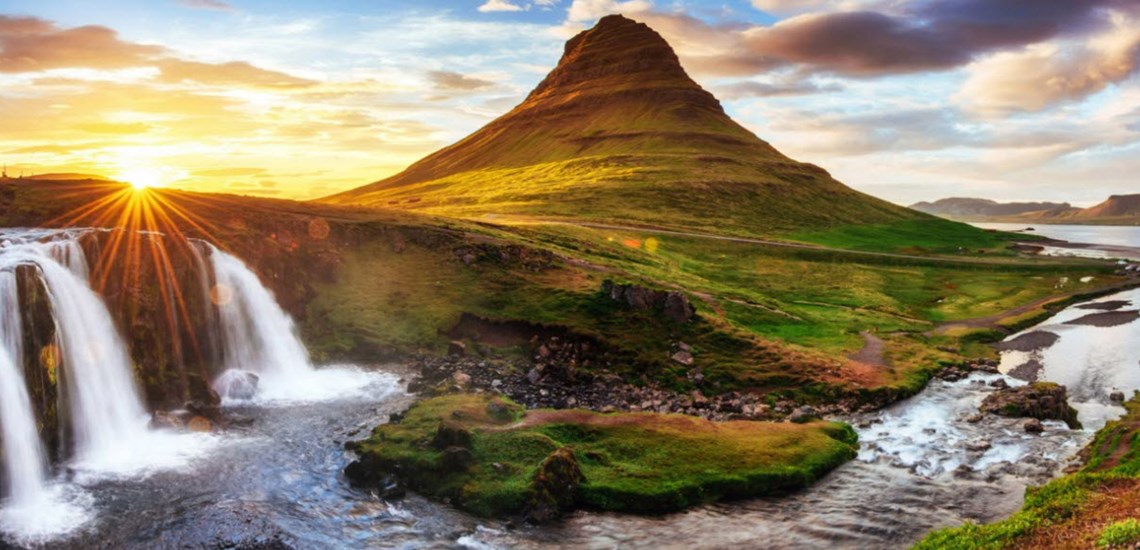
Kirkjufell on the Snæfellsnes Peninsula is one of Iceland's most iconic mountains. Its distinctive shape changes with the seasons: green in summer, snow-covered in winter and especially atmospheric when the northern lights appear above it. The classic photo angle is from the Kirkjufellsfoss side, but the mountain is beautiful from many viewpoints around Grundarfjörður.
Búðir church
Búðir is a small black church on the Snæfellsnes Peninsula, surrounded by lava fields, open coastline and mountain views. Its simple shape and dramatic setting make it a favourite stop for photographers, especially in winter or soft evening light. The church is also popular for wedding photography.
Dettifoss waterfall
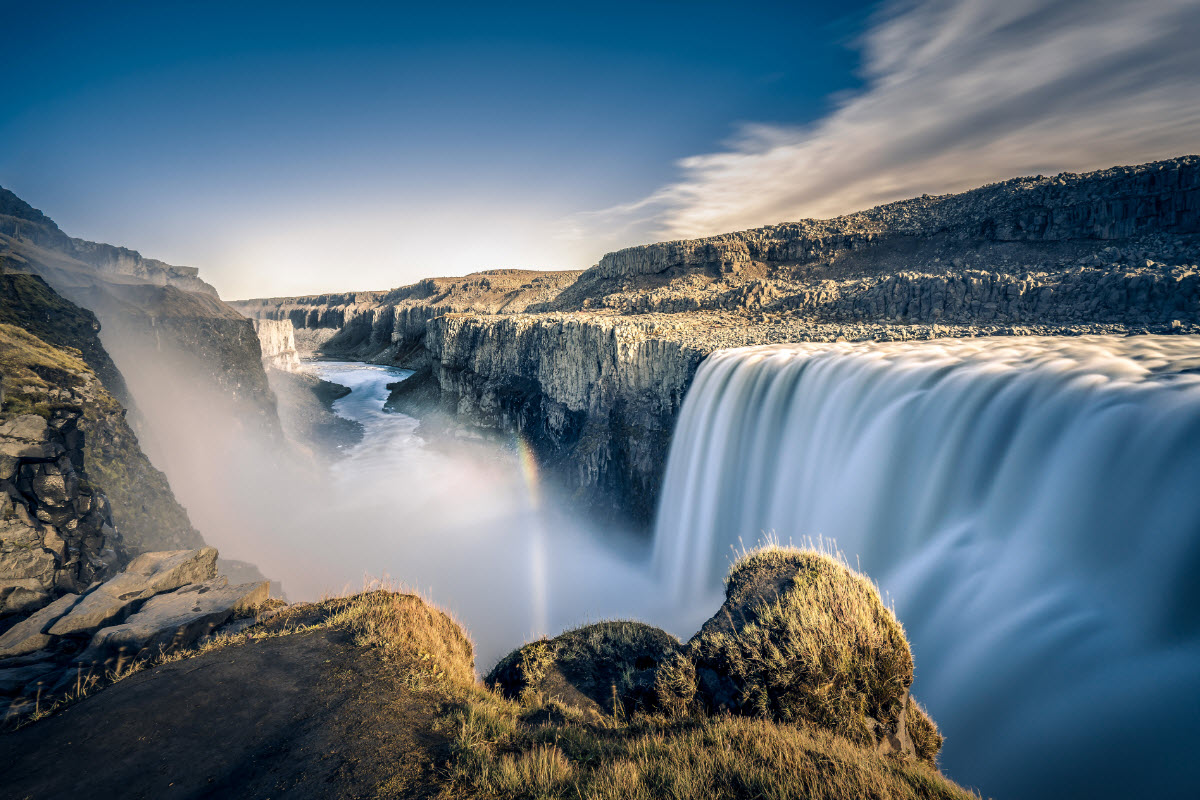
Dettifoss is one of the most powerful waterfalls in Europe and one of North Iceland's most dramatic photo stops. The waterfall is close to Lake Mývatn and the Jökulsárgljúfur area of Vatnajökull National Park. Its glacial water, heavy spray and huge canyon setting make it a place where scale matters. Check road conditions before choosing the east or west side.
Hvítserkur
Hvítserkur is a basalt sea stack on the Vatnsnes Peninsula in northwest Iceland. The 15-metre-high rock formation rises from the sea and is especially photogenic at low tide, with reflections, wet sand or a dramatic sky behind it. According to Icelandic folklore, Hvítserkur was once a creature that was caught by daylight and turned to stone.
Landmannalaugar
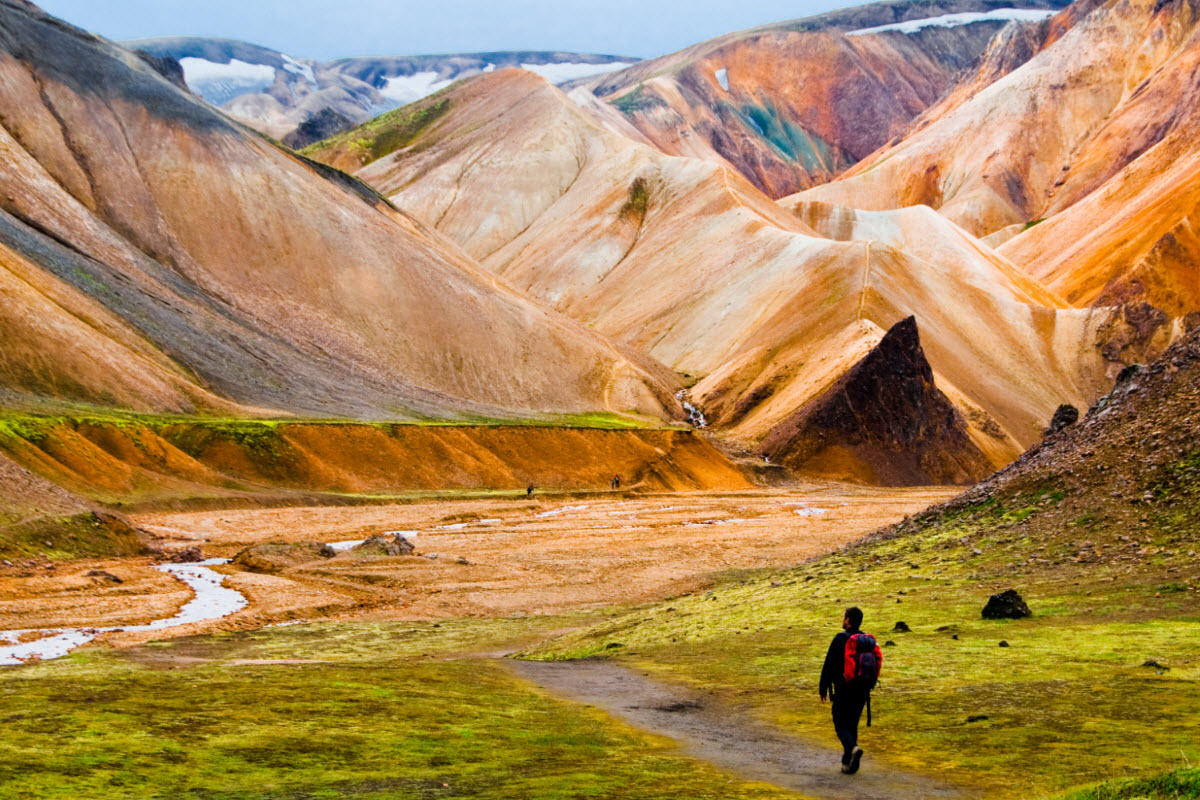
Landmannalaugar is one of the most colourful landscapes in the Icelandic Highlands. The area is known for rhyolite mountains, black lava fields, steaming geothermal ground and hiking trails with wide views. After photographing the mountains, lava, hot springs and valleys, many travellers relax in the natural geothermal bathing area nearby.
Icelandic horse
The Icelandic horse is one of the oldest and purest horse breeds in the world. No horses have been imported to Iceland for centuries, which has helped preserve the breed. Icelandic horses are small, strong and known for their friendly character and endurance. If you want to photograph them, always ask permission, never feed them and do not enter private fields.
Book your adventure

A 10-hour small-group South Coast tour from Reykjavík with Sólheimajökull, Reynisfjara, Vík, Skógafoss and Seljalandsfoss.

A 10½-hour South Coast day with a guided 1–1½-hour glacier hike on Sólheimajökull, plus Skógafoss and Seljalandsfoss.

Enter an extraordinary world of blue-white ice and glacier-fed water. Seen from a boat or kayak, drifting icebergs, mountain refle...

Glide into Iceland’s wild scenery from water level. Calm paddling, crisp air and close-up views make this a wonderfully active way...

Pair Iceland’s most cinematic waterfall coast with an exhilarating ATV ride across the vast black sands of Sólheimasandur to the l...